
What if the most difficult part of seeking depression treatment for adults wasn't the diagnosis, but the struggle to find a provider who truly listens? It's exhausting to balance the weight of persistent low mood with the anxiety of finding a local clinic that accepts your insurance and respects your concerns about medication side effects. You likely want more than just a clinical intervention; you're looking for a professional partner who values your lived experience and speaks your language rather than hiding behind confusing jargon.
This guide provides a clear roadmap for psychiatric care in 2026. You'll discover how personalized medication management and collaborative, trauma-informed care can help you reclaim emotional stability. We explore the latest treatment options, the convenience of telehealth for residents in Massachusetts and Rhode Island, and how a patient-centered approach ensures you're an active partner in your own healing journey.
Key Takeaways
- Learn why psychiatric medication management is a vital tool for balancing neurochemistry and achieving the emotional stability necessary for long-term recovery.
- Demystify the initial psychiatric evaluation by understanding the collaborative steps we take to honor your personal history and wellness goals.
- Explore how modern telehealth options for depression treatment for adults provide convenient, private access to care without the stress of commuting or clinical waiting rooms.
- Discover the value of continuous symptom monitoring and how a dedicated psychiatric partnership ensures your treatment plan remains responsive to your evolving needs.
Understanding Depression Treatment for Adults: The Role of Medication Management
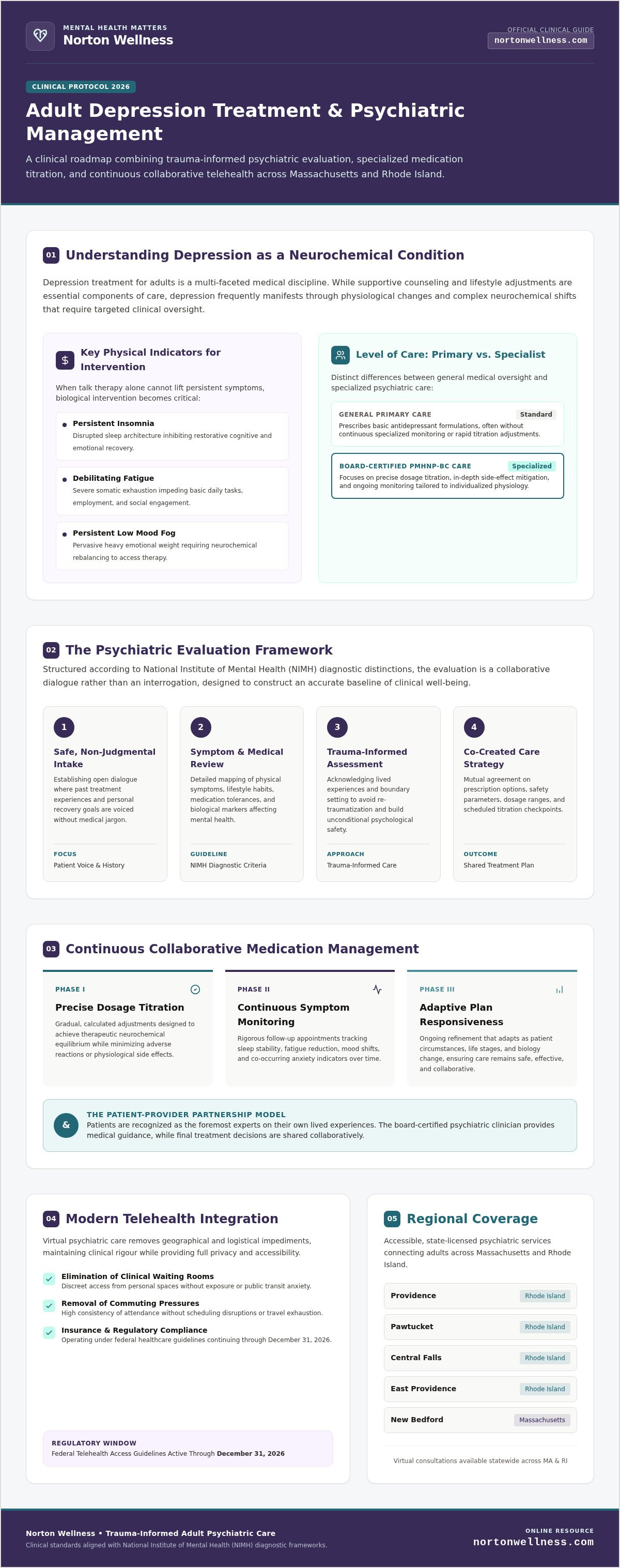
Effective depression treatment for adults is a multi-faceted medical approach that addresses complex neurochemical imbalances within the brain. While lifestyle changes and emotional support are helpful, depression often involves biological shifts that require specialized clinical expertise to resolve. We view this process as a partnership. You aren't just a patient. You're the expert on your own life, and we are here to provide the tools for your journey toward stability.
To better understand these clinical options, watch this helpful video:
Psychiatric medication management is distinct from general primary care. While a family doctor might prescribe a basic antidepressant, a specialist like a board-certified PMHNP-BC focuses on precise dosage titration and rigorous symptom monitoring tailored to your unique physiology. This level of care ensures that your treatment evolves as you do. Medication management is a collaborative process involving regular follow-ups to ensure efficacy and safety.
When to Move Beyond Therapy to Psychiatric Intervention
Sometimes, talk therapy alone isn't enough to lift the heavy fog. If you experience persistent insomnia or debilitating fatigue, your body might need more support to find its balance. These physical symptoms can make it nearly impossible to engage in daily tasks or social activities. Consulting an anxiety and depression psychiatrist can help bridge the gap by addressing co-occurring symptoms. Modern clinical management of depression and specialized depression treatment for adults often integrates medication to stabilize your mood, which then allows you to get the most out of other therapeutic efforts. We act as your compassionate guide, ensuring you feel heard and supported every step of the way.
Psychiatric Evaluation: Your Path to Stability
Entering a psychiatric evaluation can feel like a heavy step, but it's actually the first movement toward clarity. We provide a safe, non-judgmental space where you can share your history and goals without fear of being misunderstood. This assessment is a structured conversation rather than an interrogation. We review your symptoms, medical history, and lifestyle to build a complete picture of your well-being. According to the National Institute of Mental Health depression overview, a thorough evaluation is essential for distinguishing between different types of depressive disorders and ensuring the right medical intervention.
We utilize trauma-informed psychiatric care to ensure you feel secure from the very first visit. Your past experiences shape your current health. By acknowledging these factors, we co-create a personalized treatment plan that respects your boundaries and promotes healing. You're an active participant in this process. We discuss every medication and management option together, ensuring you feel confident and heard in the path we choose for your recovery.
Finding Local Care in Providence, Pawtucket, and New Bedford
Finding accessible depression treatment in Providence, RI, is vital for maintaining consistent care. We serve adults across the region, including Pawtucket and New Bedford. Residents in Central Falls and East Providence also benefit from our flexible service model that combines professional expertise with local convenience. Our approach makes depression treatment for adults reliable and supportive, bridging the gap between clinical excellence and the comfort of your community. If you're ready to take the next step, you can connect with us to begin your journey toward stability.
Modern Depression Care: Telehealth and Collaborative Management
Telehealth has transformed depression treatment for adults by removing the physical barriers that often prevent people from seeking help. You don't need to worry about the commute or the lack of privacy in a public waiting room. Through December 31, 2026, federal guidelines continue to allow for the remote prescribing of necessary medications via audio-video encounters. This flexibility is essential for the nearly 88% of adults with depressive symptoms who report difficulty managing their daily work and home responsibilities.
Our "Collaborative Expert" model ensures that your follow-up appointments are meaningful conversations about your progress, not just simple prescription refills. We use the American Psychiatric Association's diagnostic guide as a foundation to monitor your symptom remission and emotional growth. The ongoing medication management fees cover this high level of continuous monitoring. We track medication efficacy and potential side effects to keep your treatment plan precise and safe.
Integrating Care into a Busy Adult Schedule
Virtual appointments make it easier to maintain the consistency required for long-term stability. You can attend sessions from the comfort of your own home, which is a permanent option for many under current Medicare and commercial insurance rules. This accessibility helps you prioritize depression treatment for adults without disrupting your professional life. If you're ready to reclaim your emotional clarity, we invite you to schedule a consultation to discuss your unique needs. Taking this first step is a powerful act of self-care. It marks the beginning of your journey toward a more stable and fulfilling life.
Reclaiming Your Emotional Stability
Finding the right path for depression treatment for adults is a journey that requires both clinical precision and a compassionate touch. We have explored how specialized medication management provides the biological foundation for recovery, while trauma-informed evaluations ensure you feel safe and understood from the very first visit. Our board-certified expertise is paired with a flexible telehealth model designed to fit the busy lives of Rhode Island and Massachusetts residents.
You don't have to navigate this alone. By choosing a collaborative expert who prioritizes your unique lived experience, you can move from a place of overwhelming fog to one of enduring clarity and hope. Your mental health is a vital priority, and the tools for lasting transformation are closer than you think. Take the next step toward the stability you deserve.
Begin your journey toward stability; schedule a psychiatric consultation today.
Frequently Asked Questions
How do I know if I need medication for depression or just therapy?
You might need medication when biological symptoms, such as persistent insomnia or debilitating fatigue, prevent you from fully engaging in talk therapy. While therapy addresses emotional patterns, psychiatric medication targets the neurochemical imbalances that cause physical heaviness. During your evaluation in Providence or via telehealth, we collaborate to determine if medication can provide the stability you need to make therapy more effective.
What happens during a psychiatric medication management appointment?
These follow-up appointments are collaborative conversations focused on your progress and well-being. We track how your body responds to specific dosages, monitor for potential side effects, and adjust your treatment plan as needed. It's a proactive process where we listen to your lived experience to ensure your medication management remains precise, safe, and effective for your long-term emotional recovery.
Is telehealth as effective as in-person visits for depression treatment?
Yes, telehealth is a highly effective delivery method for depression treatment for adults, offering the same clinical outcomes as in-person visits. It provides increased privacy and eliminates the stress of commuting to a clinic. For residents in Rhode Island and Massachusetts, virtual care ensures you maintain the consistency required for emotional stability without the barriers of travel or clinical waiting rooms.
Do you accept insurance for depression treatment in Rhode Island and Massachusetts?
Norton Wellness accepts various insurance plans and online payments to ensure depression treatment for adults remains accessible. We serve patients throughout Rhode Island, including Pawtucket and East Providence, as well as residents in Massachusetts. We recommend contacting us directly to verify your specific coverage, as we prioritize making your path to psychiatric care as financially transparent and stress-free as possible for our local community.


