
What if the goal of treatment isn't just to "feel better," but to reclaim the version of yourself that depression has kept in the shadows? It's exhausting to wake up every morning feeling weighed down by a persistent low mood that won't lift. You might worry that starting psychiatric medication for depression means losing your personality or becoming over-medicated. We understand that fear; your autonomy is the most important part of your healing journey.
This guide shows how the right medication acts as a biological bridge to emotional stability, providing the clarity you need to engage with life again. You'll discover the differences between drug classes like SSRIs and SNRIs and learn what to expect from professional medication management in MA and RI. We'll explore how a personalized, collaborative treatment plan ensures you have a steady partner in care every step of the way.
Key Takeaways
- Understand how medication regulates essential neurotransmitters to address the biological roots of persistent low mood and fatigue.
- Compare the most effective classes of psychiatric medication for depression, such as SSRIs and SNRIs, to find the right fit for your unique needs.
- See how professional medication management in MA and RI provides a structured, safe environment for adjusting dosages and monitoring your progress.
- Empower yourself with a personalized care plan that emphasizes your autonomy and frames treatment as a collaborative journey toward emotional clarity.
How Psychiatric Medication for Depression Works to Restore Stability
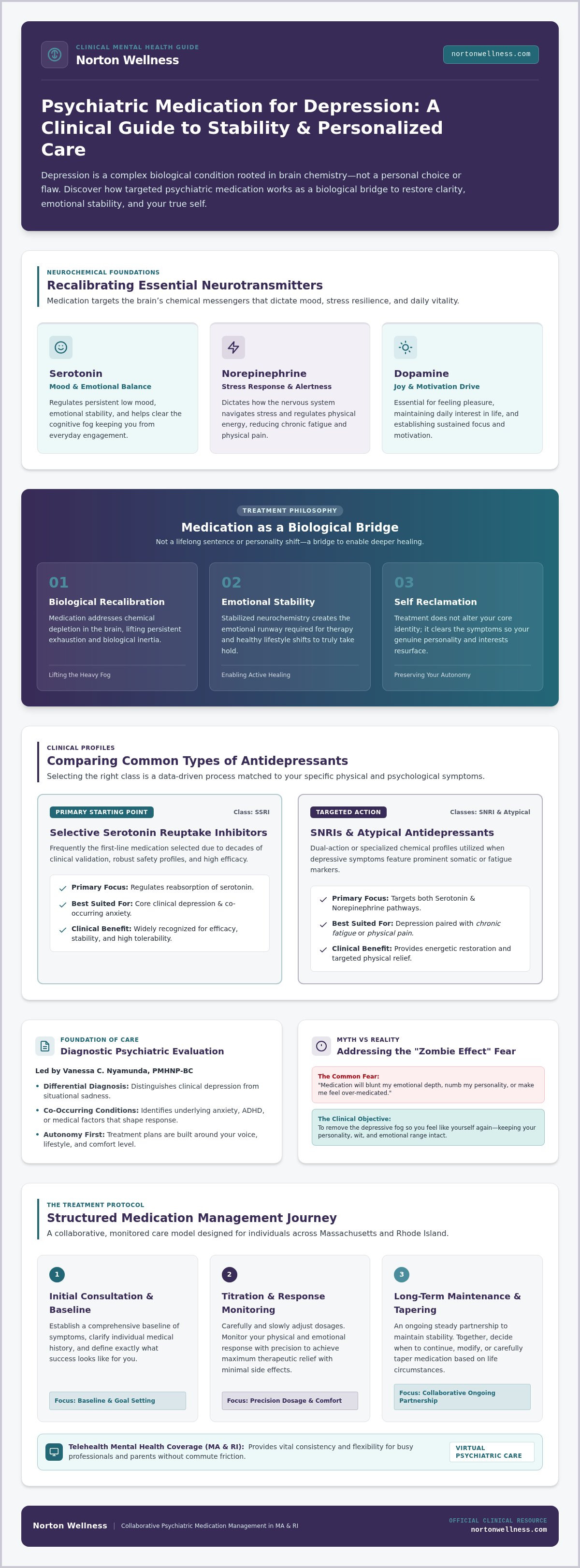
Depression isn't a choice. It is a complex biological condition rooted in the delicate chemistry of your brain, not a reflection of your strength or character. When you utilize psychiatric medication for depression, you are working to recalibrate essential neurotransmitters like serotonin, norepinephrine, and dopamine. These chemicals function as messengers that dictate how you experience joy, manage stress, and maintain energy throughout your day.
To better understand how these treatments function within the brain, watch this helpful video from the Stanford Center for Health Education:
By exploring various classes of antidepressant medications, we can find the right psychiatric medication for depression that fits your unique biological profile. We view medication as a biological bridge. It offers the emotional stability needed for therapy and healthy lifestyle shifts to truly take hold. This clarity isn't about changing who you are; it's about removing the fog so the real you can resurface.
The Role of a Diagnostic Psychiatric Evaluation
Led by Vanessa C. Nyamunda, PMHNP-BC, our comprehensive evaluations serve as the cornerstone of safe, effective care. This initial meeting allows us to distinguish between clinical depression and the heavy weight of situational sadness. We listen closely to your story to identify co-occurring conditions, such as anxiety or ADHD, which often influence which medication will serve you best. It's a collaborative process where your voice is the most important factor in building a personalized treatment plan that respects your autonomy.
Comparing Common Types of Psychiatric Medication for Depression
Choosing the right treatment requires a nuanced understanding of your unique biology. We often begin with Selective Serotonin Reuptake Inhibitors (SSRIs) because they're widely recognized for their efficacy and safety. However, if your depression is paired with chronic fatigue or physical pain, Serotonin and Norepinephrine Reuptake Inhibitors (SNRIs) or atypical antidepressants may offer better relief. The process of selecting the right medication for depression isn't about guesswork; it is a data-driven adjustment period where we monitor your body's response with precision.
Managing side effects is a partnership. We don't want the treatment to hinder your daily life. If a specific dose causes discomfort, we work together to find a balance that supports your well-being. This collaborative approach ensures you feel empowered, not overwhelmed. We view this phase as a shared journey toward clarity rather than a clinical trial. Your comfort is just as important as your progress.
Personalizing Your Care Plan: Beyond One-Size-Fits-All
Your medical history and specific symptoms guide every decision we make regarding psychiatric medication for depression. We prioritize open communication so you can tell us exactly how you feel. Many people fear the "zombie" effect, worrying they'll lose their emotional depth or become a muted version of themselves. Our goal is the exact opposite. We want you to feel like yourself again, with your personality and interests fully intact. If you're ready to explore these options, we're here to help you schedule a consultation and start your path toward emotional relief.
Navigating the Medication Management Journey in MA and RI
The path toward healing is a structured, intentional process. It begins with your initial consultation to establish a clear baseline of your symptoms and define what success looks like for you. Once we select the appropriate psychiatric medication for depression, we enter the titration phase. During this time, we monitor your body's response with precise care, adjusting dosages slowly to ensure maximum benefit with minimal discomfort. Long-term maintenance involves a steady, ongoing partnership. Together, we decide when to continue, adjust, or eventually taper your treatment based on your progress and life circumstances. For busy professionals and parents, telehealth mental health in Rhode Island provides the flexibility to maintain this vital consistency without the added stress of a commute.
Your Collaborative Partner at Norton Wellness
Vanessa C. Nyamunda, PMHNP-BC, facilitates a trauma-informed approach to psychiatric medication for depression. We recognize that your personal history deeply shapes your present health, and we treat your past experiences with the profound respect they deserve. This perspective ensures that every clinical decision respects your boundaries and supports your long-term resilience.
Accessing specialized care shouldn't be a burden. Whether you prefer in-person visits in Providence or Pawtucket, or secure telehealth sessions across Massachusetts, your care remains patient-centered and deeply accessible. We've made scheduling an appointment simple and direct so you can focus entirely on your recovery. You don't have to manage these complex changes alone. We are ready to act as your steady, reliable guide toward a life of emotional clarity and lasting stability.
Reclaiming Your Path to Emotional Stability
Reclaiming your life from the weight of depression is a brave and vital step. You now understand that psychiatric medication for depression serves as a biological bridge, helping to restore the clarity you need to move forward. By choosing a collaborative partner who values your autonomy, you can navigate the titration process with confidence. This journey is about returning to the activities and people you love with a renewed sense of hope.
At Norton Wellness, Vanessa C. Nyamunda, PMHNP-BC, offers specialized expertise in depression, anxiety, and ADHD. We provide flexible telehealth options across MA and RI to ensure your care fits your routine. You don't have to manage this alone.
Request a compassionate psychiatric consultation with Norton Wellness
A brighter, more stable future is within your reach. We are here to support you every step of the way.
Frequently Asked Questions
How long does it take for psychiatric medication for depression to start working?
Most patients begin to notice small improvements in energy or sleep within two to four weeks. However, the full emotional benefit usually takes six to eight weeks to manifest. It is a gradual process as your brain chemistry recalibrates. We monitor your progress closely during these initial weeks to ensure you are responding well to the treatment plan.
Will I have to stay on depression medication for the rest of my life?
Not necessarily, as the length of treatment depends entirely on your unique history and goals. Many people use psychiatric medication for depression as a temporary bridge to regain stability during a difficult season. We collaborate with you to decide when it's appropriate to maintain your dose or begin a careful, supervised tapering process once you feel resilient.
What are the most common side effects of antidepressants, and can they be managed?
Common side effects often include mild nausea, dry mouth, or slight changes in sleep patterns, which typically fade as your body adjusts. We manage these through precise titration and proactive communication. If a side effect impacts your daily life, we can adjust your dosage or explore a different medication class to ensure your treatment supports your well-being without discomfort.
Can I receive psychiatric medication management through telehealth in Massachusetts or Rhode Island?
Yes, we provide secure telehealth appointments for adults residing anywhere in Massachusetts and Rhode Island. Whether you are in Providence, Pawtucket, or a rural area, you can access expert care from your own home. This flexible model ensures you stay consistent with your follow-up visits, which is vital for maintaining emotional clarity and long-term health throughout your recovery.


