
What if substance use and changes in mood, sleep, or anxiety are connected rather than separate problems? If you’re unsure how to talk about both, you’re not alone. You deserve a conversation without judgment. Exploring dual diagnosis care Massachusetts can begin with looking at the whole picture, rather than choosing a label before you’ve been heard.
Dual diagnosis care refers to support for co-occurring mental health and substance use concerns. The right level of care depends on your needs. Outpatient psychiatric medication management may be one part of a broader plan, but it is not the same as rehabilitation or a complete treatment program. This guide explains what co-occurring conditions can mean, how outpatient psychiatric support may fit, and what to expect when seeking an assessment in Massachusetts. At Norton Wellness, care begins with listening and an individualized assessment.
Key Takeaways
- When substance use and emotional symptoms overlap, an individualized assessment can help clarify the concerns and what support may fit.
- Learn how dual diagnosis care Massachusetts can include outpatient psychiatric medication management as one part of a broader care plan, distinct from rehabilitation.
- Prepare to discuss your concerns, health history, current medications, and how your symptoms change over time.
- Norton Wellness offers adult psychiatric appointments in Massachusetts in person and through telehealth. Urgent emergencies require immediate crisis support.
What dual diagnosis care in Massachusetts means for adults
When substance use and emotional symptoms overlap, it can be hard to know what is driving what or where to begin. You deserve to discuss both openly and without judgment. In dual diagnosis care Massachusetts, the starting point is an individualized assessment, not an assumption that one concern explains everything.
Co-occurring conditions are mental health and substance use concerns experienced by the same person and considered together to understand their needs. The term dual diagnosis describes this overlap, but it does not identify the cause of someone’s symptoms or determine a specific treatment plan. A clinician’s assessment helps clarify which concerns are present and what level of support may fit.
How co-occurring concerns can affect an adult’s care plan
Mood, anxiety, sleep, substance use, and current medications can all be relevant to care. A clinician may ask when symptoms began, how they change over time, and whether they seem to vary with substance use, sleep, or medication changes. Sharing this context can help guide thoughtful next steps without reducing your experience to a checklist.
Similar symptoms can have different causes, and substance use does not automatically explain changes in mood or sleep. Only a qualified clinician can assess your situation. A list of symptoms cannot diagnose you.
Outpatient psychiatric medication management may be one part of support for adults, including assessment, individualized medication decisions, and follow-up. It is not a standalone cure or a substitute for every level of care. What is appropriate depends on your needs and clinical assessment, and some people may need additional or different forms of support. The aim is to understand the whole picture and make decisions collaboratively.
How outpatient dual diagnosis support considers symptoms and medication
An outpatient psychiatric appointment can give you space to discuss mental health symptoms and substance use in the same conversation. In dual diagnosis care Massachusetts, an assessment helps a clinician understand your concerns and consider what support may fit, including whether medication management is appropriate as part of a broader plan.
What to expect when discussing medication and substance use
You can expect a collaborative conversation, not judgment. Sharing what substances you use, the symptoms you’re experiencing, your prescriptions and other medications, and what you hope will change can help a clinician understand your situation. If it helps, make a few notes about when concerns began and what has changed. You do not need every detail perfectly organized to begin.
Medication decisions depend on each person’s clinical assessment, health history, current medications, and treatment goals. A clinician may discuss options and agree on next steps with you. Follow-up visits can review how you’re responding, any side effects, and whether adjustments to the plan are appropriate. Don’t start, stop, or change a prescribed medication without guidance from your prescriber.
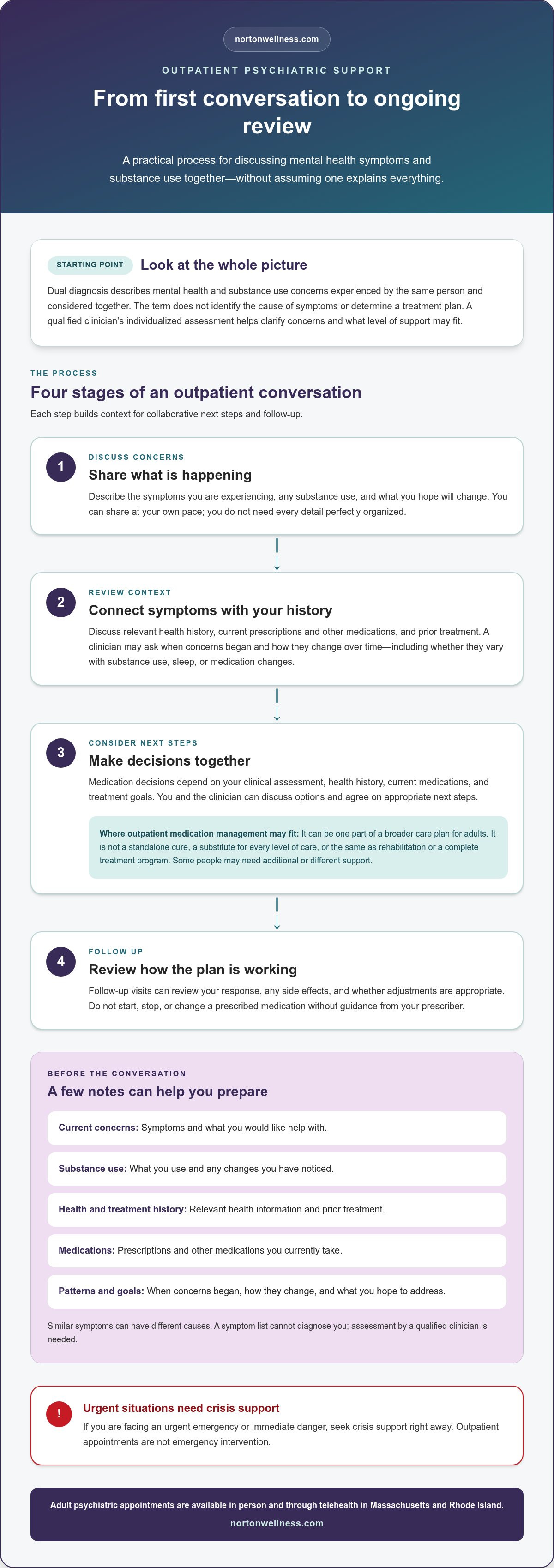
A practical process may look like this:
- Discuss concerns: Describe your symptoms, substance use, and what you want help with.
- Review context: Go over relevant health history, current medications, and any changes you’ve noticed over time.
- Agree on next steps: Consider an individualized plan together, including whether outpatient medication management may fit.
- Follow up: Review your response and discuss whether the plan needs adjustment.
For related reading, explore this adult addiction treatment guide and anxiety and depression care guide. If you’re ready to explore outpatient psychiatric support, you can request an appointment with Norton Wellness.
Taking a first step toward dual diagnosis care in Massachusetts
You do not need to know exactly what is causing your symptoms or what type of care you need before starting a conversation. Norton Wellness provides adult psychiatric services, including medication management and support related to addiction, anxiety, and depression. Adults can choose in-person or telehealth appointments in Massachusetts and Rhode Island, including for people in Pawtucket, Providence, Central Falls, and East Providence. A clinician listens, assesses your needs, and discusses appropriate next steps with you.
Preparing for an initial psychiatric conversation
A few notes can help you feel prepared, but you do not need a complete history or the perfect words. Consider writing down your current concerns, medications, substance use, prior treatment, and questions. If symptoms vary, noting when they change and what else is happening can help you describe the pattern. Sharing your symptoms, health history, medications, and goals can help a clinician better understand your needs. You can also consider whether an in-person or telehealth appointment in Massachusetts feels like a suitable way to begin.
Medication decisions are individualized and follow clinical assessment. An appointment can clarify what psychiatric support may address and whether medication management could fit into a broader care plan. It cannot guarantee a particular diagnosis, prescription, or outcome. If you’re facing an urgent emergency or immediate danger, seek crisis support right away. Outpatient appointments are not emergency intervention.
If you’re ready to take a first step toward dual diagnosis care Massachusetts, you can request an appointment or contact Norton Wellness. Bring what you can, share at your own pace, and use the conversation to explore support that reflects your circumstances.
Take a Supportive Next Step Toward Care
When substance use and mental health symptoms overlap, an individualized assessment can help clarify what support may be appropriate. Outpatient psychiatric medication management may be one part of a broader care plan, with decisions shaped by your needs and reviewed over time. Exploring dual diagnosis care Massachusetts can begin with an open, nonjudgmental conversation.
Norton Wellness provides adult psychiatric medication management and care related to addiction and mental health concerns. In-person and telehealth appointments are available in Massachusetts and Rhode Island, including for adults in Pawtucket, Providence, Central Falls, and East Providence. The practice offers patient-centered care, accepts insurance, and accepts online payments.
You do not need every answer before reaching out. A first conversation can help you discuss what has been happening and consider a path forward at your pace.
Explore the next step by requesting an appointment with Norton Wellness.
Frequently Asked Questions
What does dual diagnosis mean?
Dual diagnosis means a person has both a mental health concern and a substance use concern that need to be considered in their care. The concerns may affect one another, but symptoms alone cannot establish a diagnosis or explain their cause. A clinician can assess your experiences, health history, and current medications to understand your needs and discuss appropriate support.
Can dual diagnosis be treated on an outpatient basis?
Yes, outpatient care may be appropriate depending on a person’s symptoms, safety, and support needs. It can include psychiatric assessment and medication management, but it is not the same as rehabilitation and may not meet every person’s needs. An assessment can help determine whether outpatient support is suitable or whether a different level of care is needed.
How does psychiatric medication management fit into dual diagnosis care?
Psychiatric medication management can be one part of dual diagnosis care Massachusetts, alongside other support suited to an individual’s circumstances. A clinician reviews mental health symptoms, substance use, health history, and current medications before discussing options. Follow-up appointments can monitor response and side effects and help determine whether the plan needs adjustment. Medication decisions are individualized, not automatic.
Can I access psychiatric care for dual diagnosis concerns in Massachusetts through telehealth?
Yes. Norton Wellness offers adult psychiatric services through telehealth and in-person appointments in Massachusetts and Rhode Island, including for people in Pawtucket, Providence, Central Falls, and East Providence. Telehealth offers a remote way to discuss concerns and medication management with a clinician. Appointments are collaborative, and urgent emergencies require immediate crisis support rather than a scheduled outpatient visit. To discuss your needs, request an appointment with Norton Wellness.


