
Imagine waking up with a racing heart that tells you everything is urgent, only to find your body feels too heavy to even leave the bed. It's a cruel paradox to feel both paralyzed by panic and drained by a hollow sadness at the same time. If you feel stuck between these extremes, you're likely exhausted by the effort it takes just to exist. Working with a dedicated anxiety and depression psychiatrist can help you finally make sense of this internal conflict. Your fear of being over-medicated is a valid concern, and you deserve a partner who prioritizes your clarity over a standard prescription.
This guide explores how specialized medication management can target the intersection of these conditions to help you reclaim your emotional well-being. We'll discuss why these symptoms overlap, how a personalized treatment plan provides a path forward, and how accessible telehealth options in Massachusetts and Rhode Island make starting your recovery simpler than ever.
Key Takeaways
- Learn why anxiety and depression often fuel one another and why treating them as a single, integrated challenge is essential for lasting relief.
- Discover how a specialized anxiety and depression psychiatrist uses medication management to create a stable emotional foundation, helping you move past the feeling of being "stuck."
- Gain clarity on the collaborative psychiatric evaluation process designed to ensure you receive a personalized plan that avoids the trap of over-medication.
- Find out how to access flexible, insurance-friendly care through telehealth services tailored for busy adults living in Massachusetts and Rhode Island.
The Intersection of Anxiety and Depression: Why Specialized Care Matters
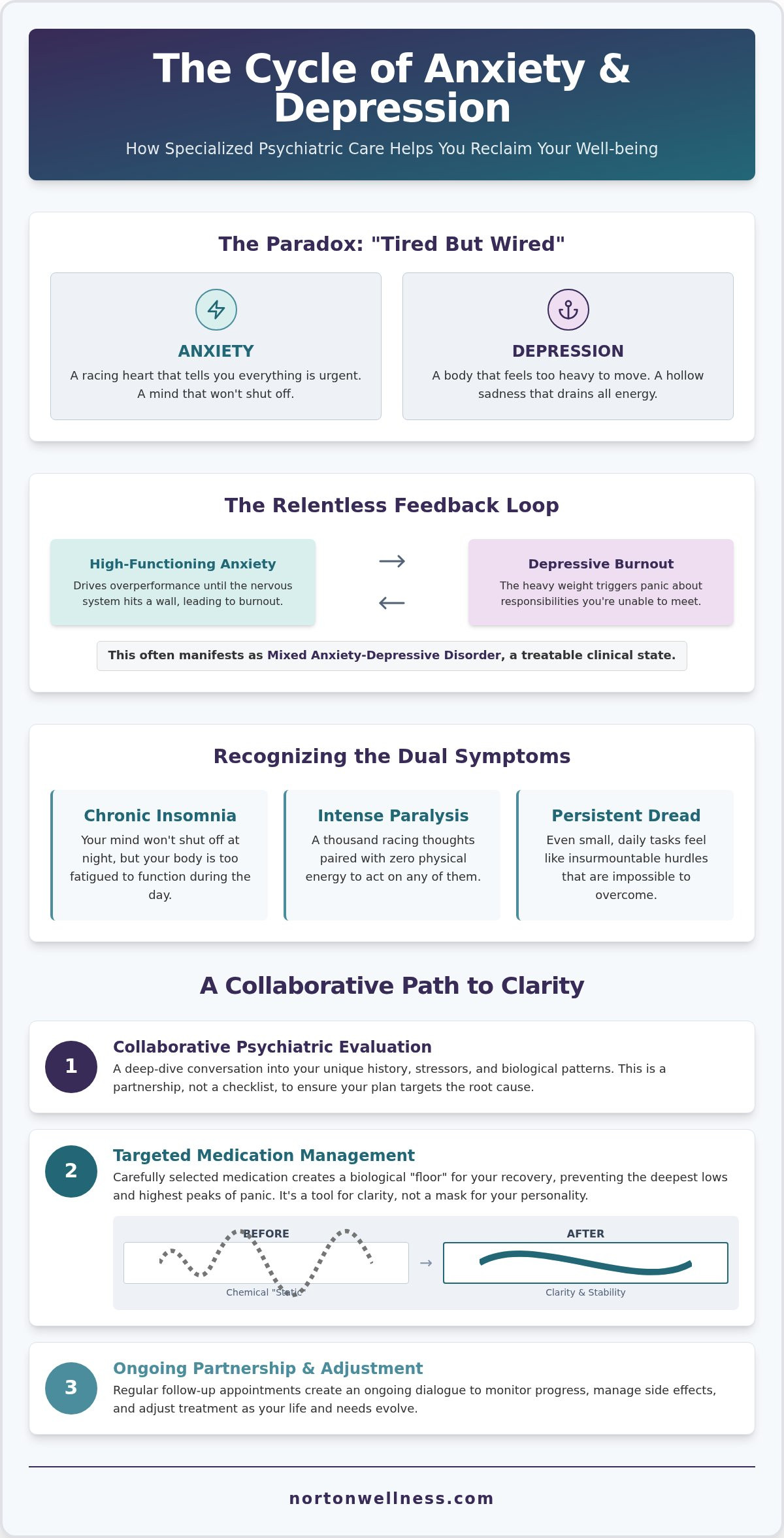
Anxiety and depression aren't just neighbors; they often act as a relentless feedback loop. High-functioning anxiety can drive you to overperform until your nervous system hits a wall, leading directly into depressive burnout. Conversely, the heavy weight of depression often triggers panic about the responsibilities you're unable to meet. This biological cycle often manifests as Mixed anxiety-depressive disorder, where the two conditions become inseparable. An anxiety and depression psychiatrist or PMHNP is uniquely trained to untangle these threads. They look past the surface to see how your brain chemistry is reacting to this dual pressure. It's vital to remember that co-occurring anxiety and depression is a treatable clinical state rather than a personal failure.
Recognizing the Signs You Need a Psychiatric Evaluation
Identifying the need for professional support starts with acknowledging the specific "dual" symptoms that define this experience. You might feel a constant sense of physical tension while simultaneously feeling completely hopeless about the future. It's a "tired but wired" sensation that leaves you feeling hollowed out. Common signs include:
- Chronic insomnia where your mind won't shut off, yet your body is too fatigued to function during the day.
- The intense paralysis of having a thousand racing thoughts (anxiety) paired with zero energy to act on any of them (depression).
- Persistent dread that makes even small daily tasks feel like insurmountable hurdles.
A patient-centered diagnostic assessment is the first step toward clarity. This process isn't a cold, clinical checklist; it's a collaborative conversation. By focusing on your unique emotional landscape, an anxiety and depression psychiatrist can build a plan that creates a stable foundation for your recovery. This evaluation ensures your treatment targets the root cause rather than just masking the symptoms.
How an Anxiety and Depression Psychiatrist Approaches Treatment
Your first visit with an anxiety and depression psychiatrist is much more than a clinical checklist. It is a deep dive into your history, stressors, and biological patterns to understand how your brain is navigating the world. Research like the Coordinated Anxiety Learning and Management (CALM) study proves that an integrated, collaborative approach significantly improves outcomes for those struggling with complex symptoms. By targeting specific neurotransmitters, medication management creates a "floor" for your recovery. This biological stability prevents you from falling into the deepest pits of despair or reaching the highest peaks of panic.
Many people worry that medication will change who they are. In reality, medication is a tool for clarity, not a "mask" for your personality. It clears the chemical static so your true self can finally emerge. This process is a collaborative journey. We work together to monitor side effects and adjust dosages until we find the precise balance that supports your unique brain chemistry and lifestyle needs.
The Role of Psychiatric Medication Management
Professional medication management is distinct from simply receiving a prescription. It involves an ongoing dialogue and careful observation to ensure your treatment remains effective as your life evolves. While therapy provides essential coping skills, medication management focuses on the biological hardware. If you're also managing focus or attention issues, you might find our guide on an Adult ADHD Psychiatrist in Massachusetts helpful for understanding how specialized care addresses different neurological needs. Regular follow-up appointments allow us to celebrate your progress and pivot your plan whenever necessary. If you're ready to start this partnership, scheduling a consultation is the first step toward reclaiming your balance.
Finding Compassionate Care in Massachusetts and Rhode Island
Finding an anxiety and depression psychiatrist shouldn't feel like another full-time job. For residents in New Bedford, Fall River, and Providence, accessing specialized care is now more streamlined than ever. Norton Wellness serves as a collaborative expert for adults from Taunton to East Providence, offering a bridge between clinical expertise and genuine empathy. We prioritize making care accessible by accepting insurance and providing simple online payment options. This ensures you can focus on your transformation rather than administrative hurdles. According to Harvard Health on anxiety, understanding the broad spectrum of these disorders is essential for finding the right fit in a provider who understands your specific challenges.
Telehealth vs. In-Person: Choosing Your Path to Wellness
Your journey to stability should fit your lifestyle. Telehealth offers incredible flexibility for busy adults in the South Coast area who are balancing demanding careers and family life. It allows for consistent medication management without the stress of a long commute through local traffic. With Massachusetts and Rhode Island continuing to strengthen mental health parity laws in 2026, it's a vital time to utilize your benefits for high-quality psychiatric support. However, if you prefer the presence of a physical connection, in-person appointments provide a dedicated space for reflection. For those who are also exploring ADHD Treatment in Providence, RI, having a provider who understands local needs is invaluable. Whether you choose the convenience of a virtual visit or an office session, the quality of care from an anxiety and depression psychiatrist remains patient-centered and non-judgmental. Our goal is to provide a steady partnership that radiates reliability and modern flexibility, ensuring you never feel like just another number in a sterile medical system.
Your Path to Emotional Stability and Growth
You don't have to navigate the paralyzing cycle of anxiety and the heavy drain of depression alone. Partnering with a specialized anxiety and depression psychiatrist allows you to untangle these overlapping symptoms and build a foundation for relief. We've discussed how patient-centered medication management serves as a tool for clarity, helping your true self emerge without the burden of chemical imbalance. Led by Vanessa C. Nyamunda, PMHNP-BC, Norton Wellness offers insurance-friendly care across Massachusetts and Rhode Island via secure telehealth. It's time to move forward with a plan that validates your experience and prioritizes your transformation.
You deserve a life defined by balance rather than a constant struggle to stay afloat.
Common Questions About Integrated Psychiatric Care
What is the difference between a psychiatrist and a therapist for anxiety and depression?
A psychiatrist or psychiatric nurse practitioner focuses on the biological and physiological aspects of your mental health through medication management. While a therapist uses talk therapy to help you process emotions and develop coping skills, a psychiatric provider specializes in the chemical side of your symptoms. Often, the most effective results come from combining both approaches to address both your mind and your body.
How long does it take for anxiety and depression medication to start working?
Most medications for these conditions take approximately four to six weeks to reach their full therapeutic effect. You might notice small improvements in your sleep or energy levels within the first two weeks, but emotional stability takes longer to build. It's a gradual process that requires patience and consistent communication with your anxiety and depression psychiatrist to ensure your dosage is correct.
Can a psychiatrist manage both my anxiety and my ADHD at the same time?
Yes, we can manage both conditions simultaneously through a comprehensive, integrated treatment plan. Many adults discover that their anxiety is actually fueled by untreated ADHD symptoms like chronic disorganization or forgetfulness. By addressing the neurotransmitters involved in both focus and emotional regulation, we can help you achieve a sense of calm and mental clarity that supports your daily productivity and peace of mind.
Is telehealth effective for psychiatric medication management?
Telehealth is highly effective for psychiatric medication management and offers the same level of clinical care as in-person visits. It provides a secure, private way to discuss your symptoms and adjust your treatment from the comfort of your home. This modern approach is particularly helpful for maintaining consistency, as it removes the barriers of travel time and scheduling conflicts that often disrupt long-term care.
Do I need a referral to see an anxiety and depression psychiatrist in MA or RI?
You generally don't need a formal referral to schedule an appointment with an anxiety and depression psychiatrist if you have a PPO insurance plan. However, some HMO plans may require a referral from your primary care provider to ensure your insurance covers the visit. We recommend checking with your specific carrier, though our team is happy to help you navigate these requirements during the initial intake process.


