
What if the persistent knot in your stomach isn't a lack of willpower, but a biological signal that your nervous system needs a different kind of support? You've likely spent months wondering, "do I need medication for anxiety," while pushing through sleepless nights and a racing heart. It's exhausting to feel like you're failing because you can't simply "think" your way out of physical symptoms like digestive issues or chronic fatigue.
You deserve to know that medication isn't a sign of weakness. It's a legitimate medical bridge that helps your brain engage with the world more effectively. This guide outlines seven clinical indicators that suggest medication could be a helpful tool for your mental health. We'll also look at what to expect from treatment in 2026, including how to partner with professional care for adults in Massachusetts and Rhode Island to find your path back to feeling normal again.
Key Takeaways
- Recognize the physical and emotional indicators, such as chronic muscle tension or a constant "internal alarm," that suggest your nervous system needs clinical support.
- Understand how a professional psychiatric evaluation helps you answer the question "do I need medication for anxiety" by looking at your unique history and lifestyle.
- Learn why medication is a collaborative tool designed to return you to your baseline personality while providing the emotional stability needed for effective therapy.
- Discover how to access expert medication management through flexible telehealth or in-person appointments in Massachusetts and Rhode Island.
Recognizing the 7 Signs You Might Benefit from Anxiety Medication
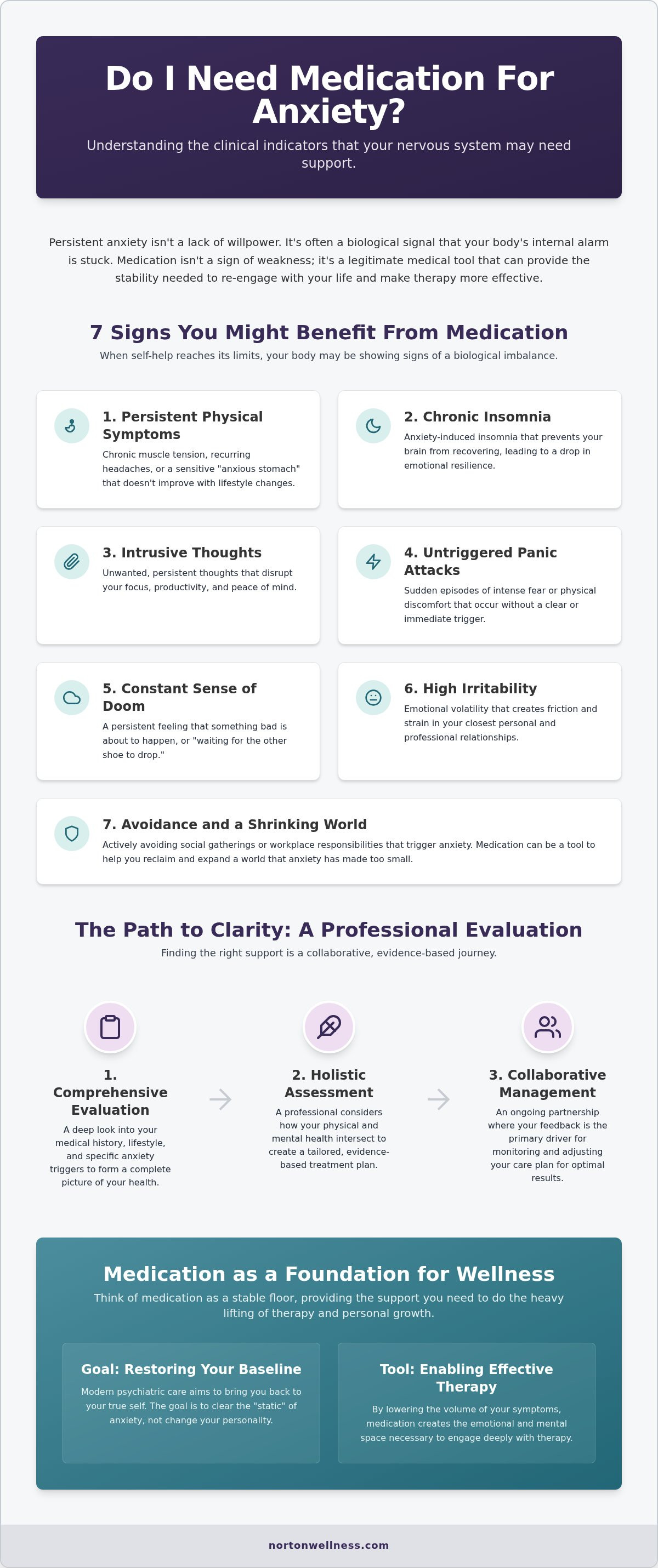
Clinical anxiety is defined as a persistent interference with daily functioning rather than a temporary, expected reaction to life's stressors. It feels like your body's internal alarm is fused in the "ON" position, even when your environment is safe. If you find yourself constantly asking, "do I need medication for anxiety," it's usually because the mental weight has become a heavy physical burden. You might experience chronic muscle tension, recurring headaches, or a sensitive "anxious stomach" that refuses to settle despite significant lifestyle changes.
Sleep is another major indicator of a biological imbalance. When anxiety-induced insomnia prevents your brain from recovering daily, your emotional resilience drops. Beyond sleep and physical pain, look for these specific signs:
- Intrusive thoughts that disrupt your work productivity or focus.
- Panic attacks that occur without a clear or immediate trigger.
- A constant sense of impending doom or "waiting for the other shoe to drop."
- Irritability that creates friction in your closest relationships.
When Self-Help and Therapy Reach Their Limits
Breathing exercises and positive thinking are helpful tools, but they can't always override a baseline biological response. When your nervous system is stuck in a loop, anxiety and depression psychiatrists provide the clinical expertise needed to bridge the gap between talk therapy and biological stability. They may prescribe anxiolytic medications to lower the volume of your symptoms. If you're still questioning, "do I need medication for anxiety," consider how much your life has shrunk. This is especially critical if you've developed avoidance behaviors, such as skipping social gatherings in Providence or avoiding workplace responsibilities in New Bedford. Medication isn't a sign of failure; it's a tool to expand a world that anxiety has made too small.
The Evaluation Process: How We Determine if Medication is Right for You
Deciding to pursue clinical support is a significant step toward reclaiming your quality of life. When you ask yourself, "do I need medication for anxiety," the answer is best found through a comprehensive psychiatric evaluation. This isn't a simple checklist or a one-size-fits-all diagnosis. Instead, we look deeply at your medical history, daily lifestyle, and the specific triggers that disrupt your peace. By partnering with a PMHNP-BC (Psychiatric Mental Health Nurse Practitioner), you receive a holistic assessment that considers how your physical health and mental state intersect.
Once we determine that a prescription may be a helpful tool, we begin the process of Medication Management. We define this as the professional monitoring and adjustment of psychiatric prescriptions to ensure your safety and optimal results. This is a collaborative journey where your voice is the most important factor. Your feedback on how you feel, including any side effects or improvements in clarity, is the primary driver of our treatment plan. Seeking professional treatment for anxiety disorders ensures your care is evidence-based and tailored specifically to your biology.
Navigating Care in Massachusetts and Rhode Island
Accessing high-quality mental health care shouldn't be another source of stress. If you're still wondering "do I need medication for anxiety" while balancing a busy career in Taunton, Fall River, or East Providence, our telehealth appointments offer the flexibility you need. We also welcome residents to our comfortable office locations in New Bedford and Providence for in-person consultations. During your first visit, we'll discuss your goals and review how your insurance coverage applies to your care. You can connect with our team to begin a partnership focused on your long-term stability.
Collaborative Care: Integrating Medication into Your Wellness Plan
Medication is often most effective when it's integrated into a broader wellness strategy. Think of it as the "floor" of your mental health house. It provides the stability you need to stand firm while you do the heavy lifting of therapy. A common fear when asking "do I need medication for anxiety" is the worry that a prescription will change your personality or make you feel like a different person. In reality, modern psychiatric care aims to bring you back to your baseline. We want to clear the "static" of anxiety so your true self can emerge without the constant interference of fear.
Our approach involves a non-judgmental environment where your concerns are heard and validated. We also look for co-occurring conditions that might be fueling your distress. For many adults, addressing untreated ADHD or chronic insomnia is the key to achieving total anxiety relief. By treating the whole person, we ensure that every biological factor is working in your favor. This comprehensive view allows us to tailor a plan that addresses your unique symptoms rather than offering a generic solution.
Your Path Forward with Norton Wellness
Vanessa C. Nyamunda, PMHNP-BC, and the entire team prioritize patient-centered care through active listening and shared decision-making. We understand that the transition from an initial diagnostic assessment to a sustainable, recurring care plan can feel daunting. We guide you through each step, ensuring your voice remains the primary driver of your treatment. Because we specialize in the Massachusetts and Rhode Island communities, we're deeply familiar with the local stressors and resources that affect your daily life. Whether you're navigating a high-pressure career in Providence or managing family life in Fall River, we're here to help you determine "do I need medication for anxiety" and build a sustainable path toward emotional clarity.
Reclaiming Your Peace and Clarity
Asking "do I need medication for anxiety" is a brave first step toward a more stable and fulfilling life. You've learned that persistent physical symptoms and an "always-on" internal alarm are clear signals that your nervous system needs clinical support. Medication isn't about changing your personality. It's about providing a solid foundation so you can engage fully with therapy and your daily goals. At Norton Wellness, we offer patient-centered care that respects your unique journey. We are licensed to serve adults in Massachusetts and Rhode Island, accepting major insurance plans to ensure your care is accessible.
Whether you choose a telehealth appointment or visit us in person in New Bedford or Providence, we're ready to listen. You don't have to carry the weight of chronic worry alone. There is a path forward to feeling like yourself again.
Frequently Asked Questions
How do I know if my anxiety is "bad enough" for medication?
Anxiety is "bad enough" when it consistently disrupts your ability to function in your career, relationships, or physical health. If you're asking "do I need medication for anxiety" because symptoms persist despite lifestyle changes and therapy, it's time for a clinical assessment. We look for indicators like chronic panic attacks or physical exhaustion that prevent you from completing daily tasks in Fall River or Taunton.
Will I have to stay on anxiety medication for the rest of my life?
Not necessarily, as the duration of treatment is a collaborative decision based on your unique biological needs and life circumstances. Many adults use medication as a temporary bridge to achieve stability while they build coping skills in therapy. We regularly review your progress and dosage to determine if and when it's appropriate to slowly taper off under professional supervision.
Can I get a prescription for anxiety through a telehealth appointment in Rhode Island?
Yes, you can access psychiatric medication management through our HIPAA-compliant telehealth platform if you're a resident of Rhode Island or Massachusetts. This modern approach allows busy professionals in East Providence or Providence to receive a full diagnostic evaluation and ongoing prescription adjustments from home. It's an efficient way to determine "do I need medication for anxiety" without the stress of a commute.
What is the difference between an anti-anxiety medication and an antidepressant?
While both treat anxiety, antidepressants like SSRIs are often used as long-term, daily treatments to balance brain chemistry. Traditional anti-anxiety medications might be used for short-term relief of acute symptoms. We often prescribe certain antidepressants because they're highly effective at reducing the baseline of chronic worry without the risk of dependency associated with older sedative-type medications.


