
A psychiatric evaluation is an empowering medical partnership, not an automatic prescription pad. If you live with racing thoughts, sudden palpitations, or disrupted sleep, booking an initial psychiatric consultation for anxiety can feel intimidating. You might worry about losing control over your treatment choices, wonder whether medication will change who you are, or feel unsure how a medical prescriber differs from a talk therapist.
It makes complete sense to feel protective of your autonomy when your nervous system is already overwhelmed. In this guide, you'll discover exactly what happens during an evaluation, how clinicians determine diagnoses, and how collaborative medication management brings lasting relief. We'll preview every assessment stage, diagnostic tool, and preparation step so you can approach your appointment with absolute confidence.
Key Takeaways
- Learn how a comprehensive psychiatric consultation for anxiety differentiates biological symptoms from everyday stress to determine if clinical intervention is your best next step.
- Discover the step-by-step assessment process, including the clinical interview stages and standardized screening tools used to evaluate symptom severity.
- Understand how collaborative medication management prioritizes your autonomy, dispelling fears about dependency or losing control over your care.
- Use a practical pre-appointment checklist to organize symptom logs, medical history, and secure telehealth options for a seamless first visit.
Understanding a Psychiatric Consultation for Anxiety: Purpose and Signs You Need One
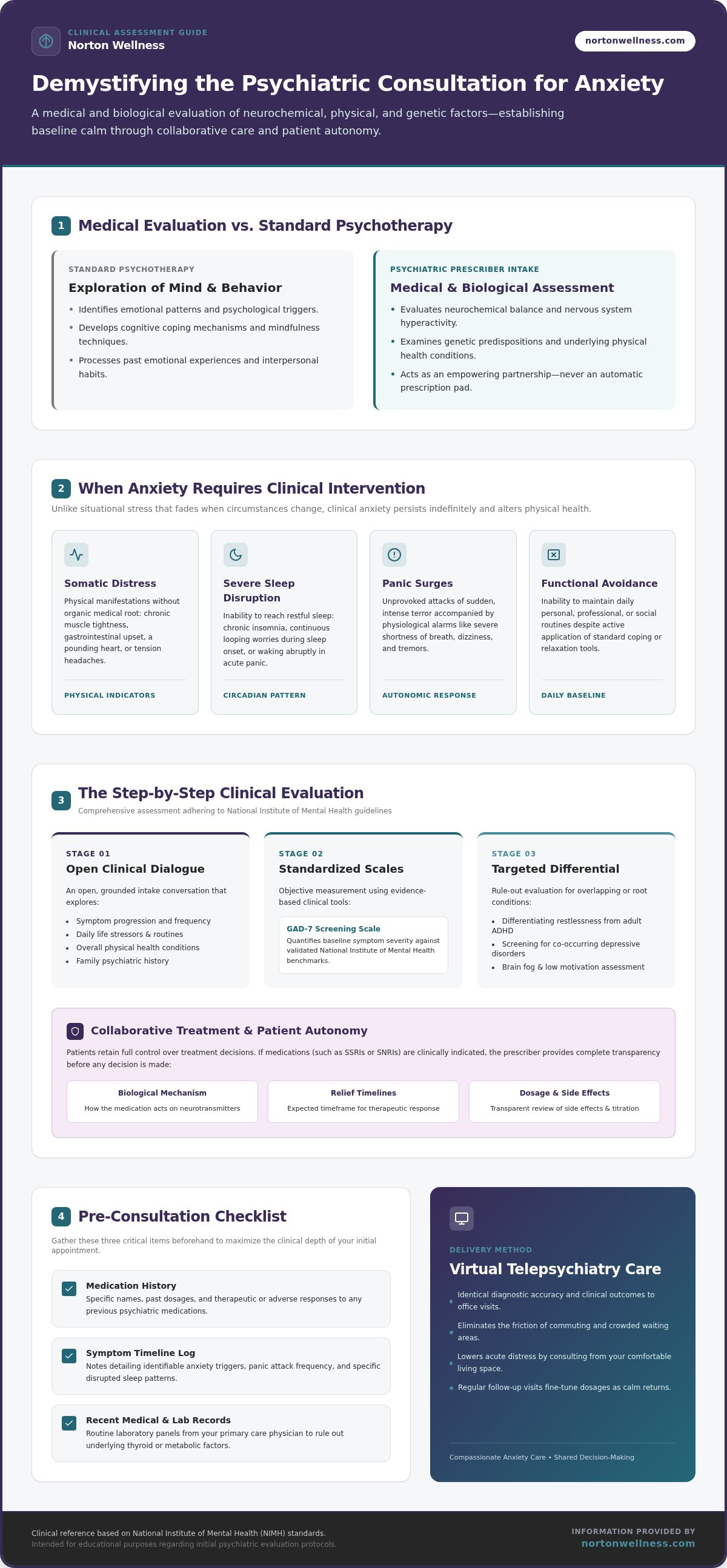
Living under constant mental pressure drains your energy. While standard psychotherapy explores emotional patterns, coping strategies, and past experiences, a psychiatric consultation for anxiety is fundamentally a medical and biological evaluation. During this intake, a psychiatric prescriber examines how neurochemical balances, physical health conditions, and genetic predispositions drive your nervous system into overdrive. Understanding the clinical psychiatric assessment process helps you see this step as a biological baseline check rather than a personal defeat.
When talk therapy and daily lifestyle shifts hit a plateau, medical evaluation provides essential answers. Deciding to book an appointment clarifies whether medication management can restore baseline calm.
Recognizing When Persistent Anxiety Requires Clinical Psychiatric Intervention
Situational stress resolves once a workplace deadline passes or personal circumstances stabilize. Clinical anxiety persists indefinitely, warping daily routines and altering physical health. Look out for these physical and emotional markers:
- Somatic distress: Chronic muscle tightness, gut issues, a pounding heart, or frequent tension headaches without an organic medical cause.
- Severe sleep disruption: Chronic insomnia, difficulty falling asleep due to looping worries, or waking up in a panic.
- Panic attacks: Unprovoked surges of intense terror accompanied by shortness of breath and dizziness.
- Functional impairment: Avoidance of everyday professional or social responsibilities despite using familiar relaxation tools.
Scheduling a psychiatric evaluation isn't an admission of weakness. It's a proactive, empowering health decision to regain control over your life.
What to Expect During an Anxiety Psychiatric Evaluation: Step-by-Step Assessment
Your initial psychiatric consultation for anxiety begins as an open, grounded dialogue rather than a detached medical interrogation. Together with your provider, you'll walk through your symptom history, daily stressors, physical health, and family background. Clinicians also utilize validated screening tools, such as the GAD-7 scale, to benchmark your baseline symptoms against established National Institute of Mental Health guidelines on anxiety disorders.
This comprehensive intake includes careful differential screening. Chronic anxiety rarely lives in complete isolation. Your clinician actively investigates whether chronic restlessness stems from undiagnosed adult ADHD, or if persistent brain fog and low motivation signal a co-occurring depressive disorder. Identifying these overlapping factors ensures your diagnostic foundation is precise and targeted.
Formulating a Collaborative, Patient-Centered Anxiety Treatment Plan
You will never leave an evaluation holding an unwanted prescription. Genuine psychiatric care relies on shared decision-making, where your comfort level leads every clinical decision. If evidence-based medications like SSRIs or SNRIs are clinically indicated, your prescriber explains their biological mechanisms, anticipated relief timelines, and potential side effects before moving forward. You always hold full control over your care.
After your initial assessment, regular follow-up visits monitor your progress, address early questions, and fine-tune dosages as your nervous system begins to settle. Establishing this steady partnership removes the guesswork from mental healthcare. When you feel ready to explore your options, you can connect with Norton Wellness to schedule your collaborative consultation.
Preparing for Your Anxiety Consultation: Telehealth Options and Next Steps
Virtual telepsychiatry offers the same diagnostic accuracy and clinical outcomes as traditional office visits, without the friction of traffic or crowded waiting rooms. Meeting from your own living room often reduces acute distress, allowing for open, authentic conversation. Preparing for your initial psychiatric consultation for anxiety ensures you and your provider make the most of your time together.
Before your comprehensive psychiatric evaluation, gather a few key details:
- Medication history: Specific names, dosages, and responses to any past psychiatric medications.
- Symptom timeline: Notes on frequent triggers, panic frequency, and sleep patterns.
- Recent medical records: Routine lab work from your primary doctor to rule out underlying thyroid or metabolic factors.
Accessing Compassionate Anxiety Care in Rhode Island
Finding the right provider shouldn't add to your mental burden. For adults across Providence, Pawtucket, Central Falls, East Providence, and throughout Rhode Island, Norton Wellness provides patient-centered psychiatric evaluations and medication management through flexible telehealth and clinic visits. Vanessa C. Nyamunda, PMHNP-BC, partners with you to develop personalized care that respects your goals and daily lifestyle.
Insurance coverage and simple digital booking eliminate friction. You don't have to carry persistent dread alone. Take your next step toward emotional stability by using the online appointment portal to schedule your psychiatric consultation for anxiety today.
Take the First Step Toward Lasting Emotional Calm
Navigating relentless anxiety becomes significantly easier when you have a dedicated clinical partner. A comprehensive psychiatric evaluation provides the biological clarity you need, moving far beyond temporary coping mechanisms to identify root causes. Under the guidance of board-certified psychiatric nurse practitioner Vanessa C. Nyamunda, PMHNP-BC, Norton Wellness delivers supportive, insurance-backed care tailored to your unique biology. Whether you connect through secure telehealth across Massachusetts and Rhode Island or schedule an in-person visit, you remain in complete control of your treatment path without pressure or judgment.
Restoring your peace of mind is an achievable journey, and sustainable relief starts with one clear conversation. You don't have to carry the weight of chronic tension alone. A calm, balanced life is well within your reach.
Frequently Asked Questions
What is the primary difference between seeing a therapist and having a psychiatric consultation for anxiety?
Therapy focuses on cognitive processing, behavioral modification, and emotional exploration, while a psychiatric consultation for anxiety is a formal medical assessment. Psychiatric prescribers evaluate your physical symptoms, family medical genetics, and neurochemistry. They diagnose clinical disorders and prescribe evidence-based medications, providing biological treatment that works synergistically with the coping tools learned in counseling.
Will I be required or pressured to take prescription medication during my first psychiatric appointment?
No, you will never be pressured into taking medication. High-quality psychiatric care operates strictly through shared clinical decision-making. Your provider discusses whether pharmacotherapy is medically appropriate, outlines potential risks and benefits, and answers your questions thoroughly. The final choice to begin, adjust, or decline medication always rests entirely in your hands.
Can an initial psychiatric consultation for anxiety be completed effectively through telehealth?
Yes, virtual consultations provide the exact same diagnostic accuracy and personalized care as traditional office visits. Board-certified clinicians evaluate your symptoms, review medical history, and formulate treatment plans over a secure video link. For adults living across Providence, Pawtucket, Central Falls, and East Providence, telehealth offers immediate clinical access without travel stress.
How should I prepare for my first adult psychiatric evaluation for anxiety?
Prepare by writing down a concise log of your anxiety triggers, daily physical symptoms, and sleep patterns. Gather a complete list of past and current medications, including supplements and exact dosages. If possible, have recent lab results from your primary physician ready to help your clinician rule out underlying medical factors.


