
What if your psychiatric appointment felt less like a clinical interrogation and more like a safe harbor for your nervous system? For many, the search for a trauma psychiatrist Rhode Island can feel like an exhausting battle against sterile systems that don't quite grasp the physical weight of your past experiences. It's draining to navigate daily overwhelm while fearing that a new provider might misunderstand your triggers or prioritize clinical checklists over your actual safety.
You deserve a medical partner who truly listens. In this guide, you'll learn how to identify a trauma-informed expert who prioritizes nervous system regulation and long-term healing over simple symptom suppression. We will walk through the process of finding insurance-friendly care in RI and explore how a collaborative, telehealth-accessible relationship can provide the steady support you need to finally move forward with confidence.
Key Takeaways
- Understand how a trauma-informed framework prioritizes your safety and nervous system regulation to create a foundation for lasting stability.
- Learn the specific criteria for selecting a trauma psychiatrist Rhode Island who operates as a collaborative partner rather than a detached clinician.
- Discover how psychiatric medication management can lower the volume of hypervigilance, making it easier to manage daily tasks and engage in deeper healing.
- Identify ways to access compassionate, specialized care through flexible telehealth options that fit into your life and accept major insurance plans.
Understanding Trauma-Informed Psychiatric Care in Rhode Island
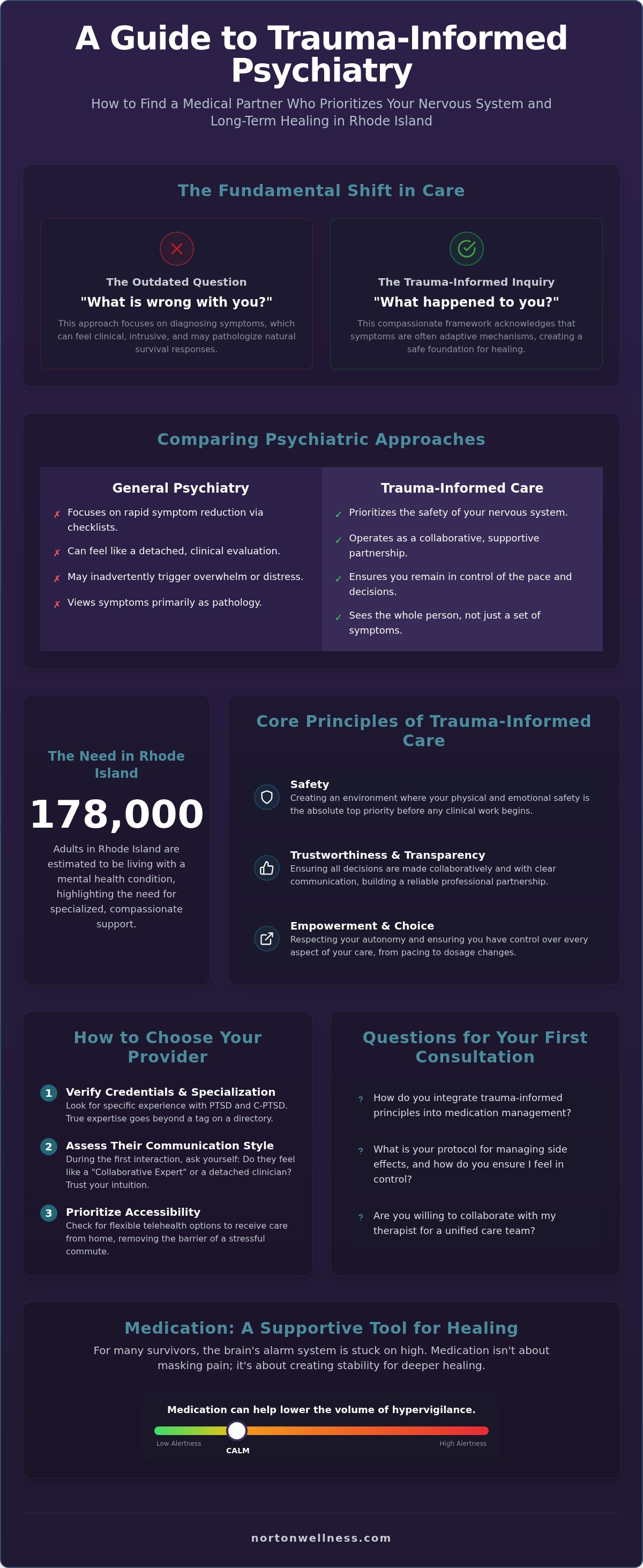
Trauma-informed care isn't just a clinical specialty; it's a profound framework that acknowledges how deeply distressing events reshape both the brain and the body's stress response. When you search for a trauma psychiatrist Rhode Island, you're seeking a professional who understands that your current symptoms are often adaptive survival mechanisms. This approach marks a vital shift in the medical field. We move away from the pathologizing question of "What is wrong with you?" and instead explore the compassionate inquiry of "What happened to you?".
With an estimated 178,000 adults in Rhode Island living with a mental health condition, the need for specialized support is clear. Finding a dedicated trauma psychiatrist Rhode Island means choosing a provider who sees the whole person rather than a set of symptoms. This local connection ensures your care is tailored to the realities of healing within our community, providing a more intimate and patient-centered experience than large, impersonal healthcare systems.
To better understand how trauma impacts your wellbeing, watch this helpful overview:
The core principles of trauma-informed care include safety, trustworthiness, and empowerment. By applying these to medication management, your provider ensures that every prescription or adjustment is a collaborative decision that respects your history and your autonomy. This partnership allows you to feel secure while exploring medical options for recovery.
The Difference Between General Psychiatry and Trauma-Informed Medication Management
While general psychiatry often focuses on rapid symptom reduction through a diagnostic checklist, trauma-informed management prioritizes the safety of your nervous system. A standard evaluation can sometimes feel cold or intrusive, which may inadvertently trigger the very overwhelm you're trying to manage. In contrast, a trauma-informed provider conducts follow-ups with extreme care, ensuring you remain in control of the pace. This specialized trauma-informed psychiatric care creates the stable foundation necessary for true recovery. It's about building a partnership where your physical and emotional safety come first.
How to Choose the Right Trauma Psychiatrist in Rhode Island
Selecting the right medical partner is a deeply personal step toward emotional stability. You need a trauma psychiatrist Rhode Island who doesn't just manage symptoms but understands the neurobiology of survival. Start by verifying credentials and specific experience with PTSD and C-PTSD. In this field, expertise isn't just a tag on a directory. It's a specific lens of clinical care that recognizes how past events live in the present body.
Pay close attention to your intuition during the first interaction. Assess the provider’s communication style; do they feel like a "Collaborative Expert" or a detached clinician? Your sense of safety depends on this professional partnership. Accessibility also matters when your nervous system is overwhelmed. Look for providers offering telehealth in Providence, East Providence, or Central Falls. This flexibility ensures you can receive expert-recognized trauma treatment from home, removing the barriers of a stressful commute. Finding a partner who prioritizes your growth is essential. You can learn more about our approach at nortonwellness.com to see if we're the right fit for your goals.
Key Questions to Ask During Your Initial Consultation
Use the first meeting to gauge their clinical philosophy and empathy. Ask directly: "How do you integrate trauma-informed principles into medication management?" It's also vital to inquire about their protocol for side effects and how they ensure you feel in control of every dosage change. Working with a dedicated trauma psychiatrist Rhode Island ensures your bodily autonomy is always respected. Finally, confirm their willingness to collaborate with your therapist. A unified care team creates the most effective path to lasting transformation. If you're ready for this level of supportive care, you can schedule a collaborative consultation to begin your healing journey.
Medication Management: A Supportive Tool for Trauma Healing
For many survivors, the world feels perpetually unsafe because the brain's alarm system never turns off. Psychiatric medication management isn't about masking your personality; it's about "lowering the volume" of hypervigilance. When your nervous system is constantly scanning for threats, engaging in deep therapeutic work is nearly impossible. By using medication as a supportive tool, a trauma psychiatrist Rhode Island helps you reach a state of physiological calm where healing can finally take root. Finding the right trauma psychiatrist Rhode Island means choosing someone who respects this delicate biological balance.
This biological support is especially vital when trauma triggers adjacent challenges like ADHD or chronic insomnia. Trauma often fractures our ability to focus or rest, making daily tasks feel like insurmountable hurdles. We treat these symptoms as interconnected parts of your story. Our collaborative model ensures that you and your provider decide on every dosage change together. You're never a passive recipient of care; you're an active partner in your own transformation.
The Synergy of Medication and Therapy in Rhode Island
It's helpful to view medication as a stabilizer rather than a "cure" for trauma. It provides the foundation of safety that allows you to do the hard, necessary work of counseling. Norton Wellness actively coordinates with local RI therapists to ensure your medication and therapy are working in harmony. This holistic approach prevents the fragmented care often found in larger medical systems. We believe your medical expert should be a steady partner in your journey toward stability. Please feel free to contact our team to discuss how an integrated care plan can support your specific path to recovery.
Embracing a Future of Stability and Healing
You deserve to feel safe in your own body and secure in your medical care. Finding a trauma psychiatrist Rhode Island who views your symptoms as survival adaptations rather than defects is the first step toward lasting change. By choosing a provider who prioritizes nervous system regulation and works collaboratively with your therapist, you create a comprehensive support system for your recovery. Our practice at Norton Wellness is built on this foundation of partnership, offering specialized adult trauma-informed medication management while accepting most major insurance plans in RI and MA.
Your journey toward emotional relief is a collaborative path, and you don't have to walk it alone. We're here to help you regain your clarity and find your steady ground once more.
Frequently Asked Questions
What should I look for in a trauma psychiatrist in Rhode Island?
Look for a provider who explicitly practices trauma-informed care and understands the physical impact of stress on the body. It's essential to find a trauma psychiatrist Rhode Island who prioritizes your safety and autonomy during every visit. You should feel heard and respected as a partner in your treatment; this ensures the clinical relationship remains supportive rather than triggering or detached.
Can a psychiatrist help with trauma without using heavy medications?
Yes, trauma-informed psychiatry focuses on finding the most effective, least intrusive support for your nervous system. We don't believe in heavy sedation but rather in using medication as a tool to reduce hypervigilance. This approach allows you to engage more fully in your daily life and therapeutic work without feeling disconnected or over-medicated during the healing process.
Does Norton Wellness offer telehealth for trauma psychiatry in RI?
Norton Wellness provides secure telehealth appointments for residents throughout Rhode Island, including Providence, East Providence, and Central Falls. This flexibility ensures you can access specialized care from a trauma psychiatrist Rhode Island without the stress of a long commute. We accept most major insurance plans, making it easier to receive high-quality, patient-centered medication management from your home.
How does medication management differ from trauma therapy?
Medication management focuses on the biological aspects of trauma by stabilizing the brain's stress response. While trauma therapy involves processing past events and building emotional coping skills, medication acts as a biological stabilizer that makes that deep work possible. These two approaches are most effective when integrated; we prioritize collaborating with your therapist to ensure your recovery plan is unified.


