
You’re staring at the nursery door in the quiet hours of the morning, wondering why the joy you expected feels replaced by a heavy, suffocating fog. It’s a lonely place to be, especially when you’re worried that admitting your struggle might lead to judgment. You aren't alone in this feeling. In 2022, 10.0% of mothers in Massachusetts reported frequent depressive symptoms, yet navigating medical systems while exhausted remains a massive hurdle. Understanding the specific symptoms of postpartum depression , postpartum psychosis, and the baby blues is the first step toward reclaiming your life. We agree that your emotional health is just as vital as your physical recovery. This article provides the clarity you need to distinguish between these conditions and offers a clear path to professional support in Massachusetts and Rhode Island. Let’s explore these differences together so you can move toward stability and hope.
Key Takeaways
- Distinguish between the temporary "baby blues" and clinical symptoms to understand when professional support is necessary for your well-being.
- Recognize the critical differences between postpartum depression , postpartum psychosis to identify when a situation requires urgent medical intervention.
- Explore how psychiatric medication management can serve as a collaborative tool for restoring clarity and emotional health after childbirth.
- Find out how to access specialized care through telehealth from the comfort of your home in Providence, New Bedford, or surrounding areas.
Understanding Postpartum Depression: More Than Just the Baby Blues
Many new parents experience the "baby blues," which typically resolve within two weeks. However, Understanding Postpartum Depression involves recognizing it as a distinct clinical condition that requires professional support. Recognizing the difference between the persistent fog of postpartum depression , postpartum psychosis ensures you receive the correct level of care early in your journey. This condition typically emerges within the first few weeks or months after delivery, lasting much longer than the initial period of adjustment.
Core symptoms often include a deep, unwavering sadness and a total loss of interest in activities you once loved. You might feel a heartbreaking difficulty bonding with your infant or experience intrusive thoughts that spark fear. It's vital to remember that this is a medical condition, not a personal failure or a reflection of your ability to parent. While the distinction between postpartum depression , postpartum psychosis is critical for safety, both conditions deserve a non-judgmental, clinical approach. In 2022, 10.0% of mothers in Massachusetts reported these symptoms, proving that you are part of a community that deserves support rather than silence.
To gain a deeper perspective on how these conditions differ, watch this expert discussion:
The Role of Psychiatric Medication Management in PPD
When emotional distress feels like an anchor, psychiatric medication management can provide the "emotional floor" necessary for healing. This isn't about masking your feelings. It's about balancing brain chemistry to give you the clarity needed to care for yourself and your baby. We treat this as a partnership. We carefully discuss options, find the precise dosage for your needs, and monitor your progress through regular visits. Our anxiety and depression treatment focuses on transformation, helping you move from a place of exhaustion to one of stability and hope.
Postpartum Psychosis: Identifying a Mental Health Emergency
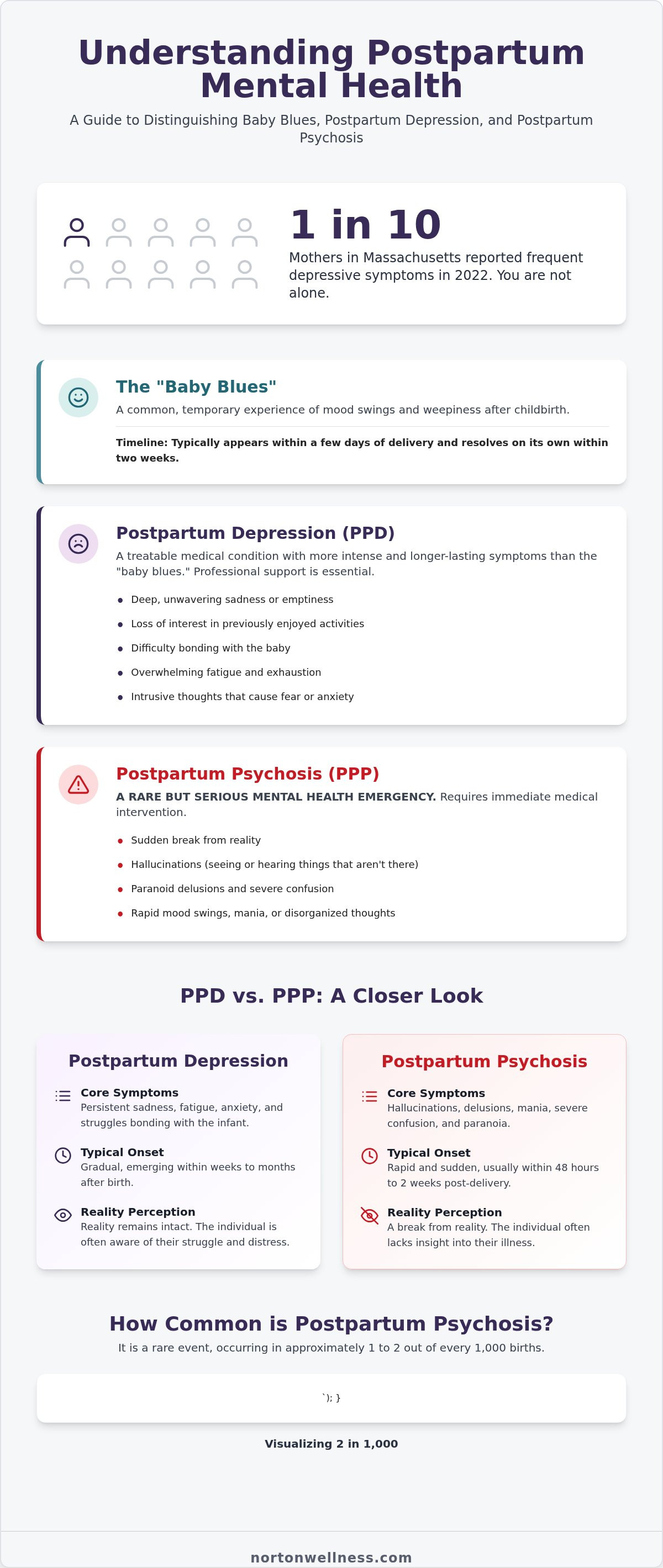
While postpartum depression is common, Postpartum Psychosis: A Mental Health Emergency represents a rare psychiatric crisis, occurring in roughly 1 to 2 out of every 1,000 births. It typically strikes with startling speed, often within the first two weeks after delivery. Unlike the heavy, slow fog of depression, this condition is marked by a sudden break from reality. Individuals may experience vivid hallucinations, paranoid delusions, or disorganized thinking that makes coherent conversation impossible. Distinguishing between the symptoms of postpartum depression , postpartum psychosis is vital because psychosis requires immediate, inpatient medical intervention to ensure the safety of both parent and child.
| Feature | Postpartum Depression (PPD) | Postpartum Psychosis (PPP) |
|---|---|---|
| Core Symptoms | Persistent sadness, fatigue, bonding struggles | Hallucinations, mania, confusion, delusions |
| Typical Onset | Weeks to months after birth | Rapidly, usually within 48 hours to 2 weeks |
| Reality Perception | Reality remains intact; awareness of struggle | Break from reality; lack of insight into illness |
Red Flags for Partners and Family Members
Partners are often the first to notice subtle, alarming shifts in behavior. Watch for strange speech patterns, sudden hyperactivity, or a total inability to sleep even when the baby is resting. If you suspect a break from reality or observe erratic behavior, take your loved one to the nearest emergency room immediately. Norton Wellness provides specialized outpatient medication management once a patient is stable, helping you navigate the journey toward long-term recovery. If you need guidance on the next steps for stabilization, reach out to us today to discuss a collaborative care plan.
A Path Toward Stability: Seeking Treatment in MA and RI
Once you recognize the signs of postpartum depression , postpartum psychosis, the next step is a comprehensive psychiatric evaluation. This assessment isn't just a clinical formality. It's the foundation of your recovery. Vanessa C. Nyamunda, PMHNP-BC, provides a non-judgmental space where your experiences are validated. By looking at your specific symptoms and history, we determine the most effective path toward emotional relief. It's a collaborative process designed to return your sense of clarity and purpose.
Accessing care shouldn't be a burden when you're already exhausted. Our telehealth appointments provide a vital bridge for new parents in New Bedford, Providence, and Fall River. You don't have to worry about childcare or travel. Instead, you can connect with a specialist from your own home. This accessibility is crucial, especially since Rhode Island received a "C" grade in the 2026 Maternal Mental Health State Report Card, showing that many families still face gaps in traditional care systems.
Recovery is a collaborative journey. Medication management works best when integrated into a broader wellness plan. This often includes:
- Coordination with your existing therapist for unified care.
- Regular monitoring to adjust dosages as your body heals.
- A focus on long-term stability and personal growth.
How to Access Compassionate Care at Norton Wellness
Taking the first step is often the hardest part. We've simplified the process of scheduling psychiatric medication management to remove unnecessary stress. Our services are available to residents across Massachusetts and Rhode Island via secure video platforms. You deserve to feel like yourself again. Reach out today to begin your transformation and rediscover the joy in your daily life.
Your Journey Toward Healing Begins with a Single Step
Navigating the early days of parenthood is already a monumental task. Adding the weight of a mood disorder can make every hour feel insurmountable. By learning to distinguish between postpartum depression , postpartum psychosis, you've already taken a vital step toward safety and clarity. Remember that these are treatable medical conditions, not reflections of your character. Professional support is available to help you build an emotional floor and find your way back to yourself. Led by board-certified expert Vanessa C. Nyamunda, PMHNP-BC, Norton Wellness offers specialized psychiatric medication management tailored to your unique needs. Whether you're in Massachusetts or Rhode Island, our secure telehealth platform brings compassionate expertise directly to your home.
Schedule a Compassionate Psychiatric Consultation Today
You don't have to carry this burden alone. Hope is within reach, and a more stable, joyful future is possible for you and your family.
Frequently Asked Questions
Is postpartum depression different from the baby blues?
Postpartum depression is different from the baby blues because of its duration and intensity. While the baby blues typically resolve within two weeks, PPD is a clinical condition that persists and interferes with daily life. If your sadness or fatigue doesn't lift after the first fourteen days, it's time to seek a professional evaluation to ensure you get the support you deserve.
Can I take medication for postpartum depression if I am breastfeeding?
You can often take medication for postpartum depression while breastfeeding. Many modern treatments have a well-documented safety profile for nursing infants. We work closely with you to choose medications that prioritize your mental health while respecting your breastfeeding goals. Our goal is to ensure you feel stable and capable of caring for your baby safely.
How do I know if I am experiencing postpartum psychosis or just severe anxiety?
The primary distinction lies in your connection to reality. Severe anxiety involves intense worry or intrusive thoughts, but you recognize these thoughts as unwanted. In contrast, the difference between postpartum depression , postpartum psychosis involves a total break from reality, such as hearing voices or holding false beliefs. If you're confused or seeing things others don't, please seek immediate emergency medical care.
Does Norton Wellness accept insurance for postpartum psychiatric care in Rhode Island?
Norton Wellness accepts several major insurance plans for psychiatric services in Rhode Island. Since insurance details can be complex, we encourage you to reach out so we can verify your specific benefits. Our telehealth appointments ensure that mothers in Providence and Fall River can access board-certified psychiatric medication management without the stress of traveling to an office.


