
Feeling overwhelmed by anxiety, struggling to focus, or weighed down by depression can make every day feel like a battle. You might feel like you've tried everything, but nothing provides lasting relief. If you're looking for a path toward stability, professional psychiatric medication management in Massachusetts can provide the support and clarity you need to reclaim your life. This isn't about finding a quick fix; it's about forming a collaborative partnership to balance your brain chemistry, allowing you the space to heal and grow.
At Norton Wellness, we believe that medication is a powerful tool, not a final answer. It’s a way to build a stable foundation so you can do the deeper work of therapy and personal development. This guide will walk you through how our compassionate, trauma-informed approach to medication management works and how it can help you find your way back to yourself.
What is Psychiatric Medication Management and How Can it Help You?
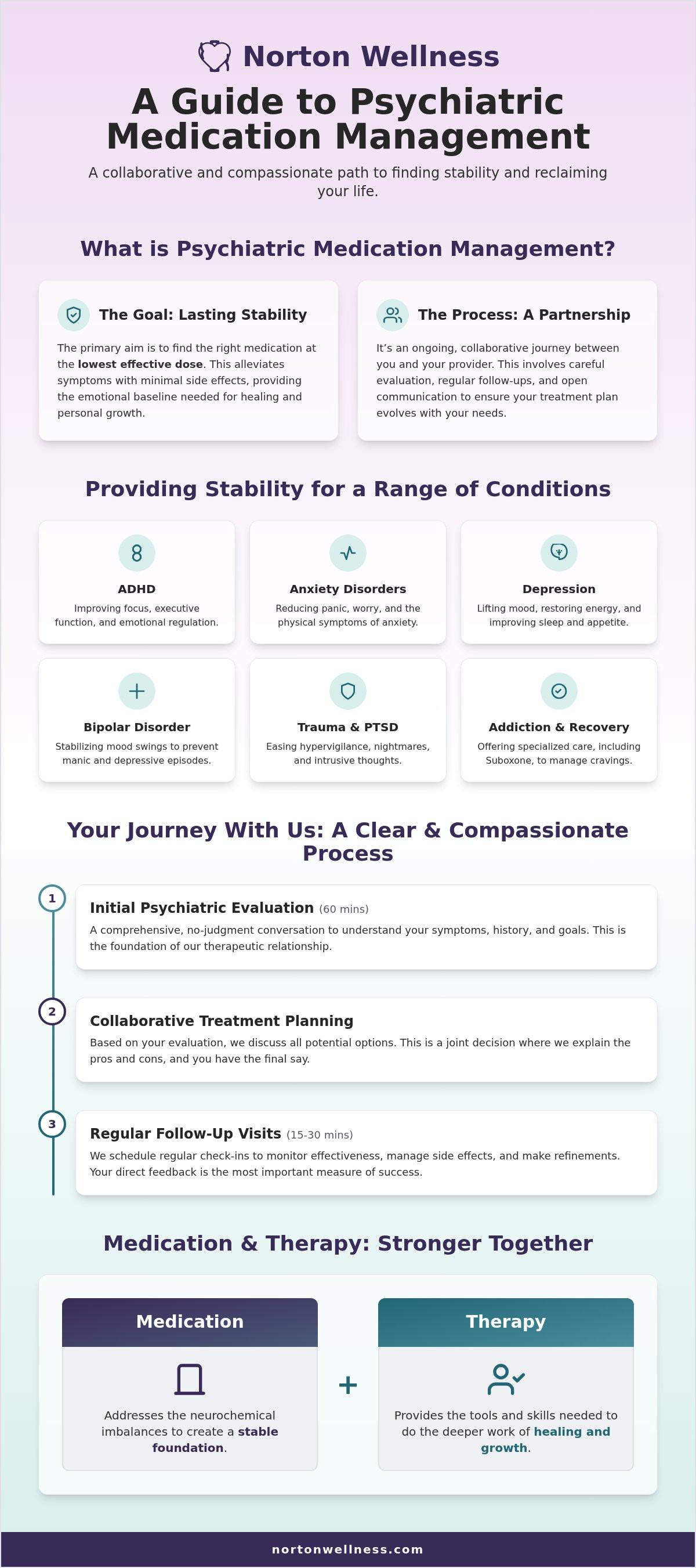
Psychiatric medication management is a specialized clinical service focused on prescribing, monitoring, and adjusting medications to treat mental health conditions. It’s far more than just "getting a script"—it's an ongoing, collaborative partnership between you and a qualified provider. The goal is to find the right medication at the lowest effective dose to alleviate your symptoms with minimal side effects, giving you the emotional baseline necessary for true healing.
This process is a data-driven yet empathetic method for optimizing your mental health treatment. It involves careful evaluation, regular follow-ups, and open communication. Your provider, often a Psychiatric Mental Health Nurse Practitioner (PMHNP), works with you to track progress, manage any side effects, and ensure your treatment plan evolves with your needs. This continuous oversight is what makes professional management different from a one-time prescription from a general practitioner.
The Role of the PMHNP in Your Care
A Psychiatric Mental Health Nurse Practitioner (PMHNP-BC) is a board-certified advanced practice nurse with specialized training in psychiatry. They are qualified to diagnose mental health conditions, prescribe medication, and provide therapy. At Norton Wellness, our care is led by Vanessa C. Nyamunda, PMHNP-BC, who brings a holistic nursing model to psychiatric care. Unlike traditional medical models that can sometimes focus narrowly on symptoms, the nursing model emphasizes treating the "whole person." This means we consider your physical health, emotional state, life experiences, and personal goals when creating your treatment plan. It’s a partnership built on listening and respect.
Conditions Treated Through Medication Management
A personalized medication plan can address the biological components of many mental health challenges, providing stability and relief. We specialize in treating adults with a range of conditions, including:
- ADHD: Improving focus, executive function, and emotional regulation.
- Anxiety Disorders: Reducing panic, worry, and the physical symptoms of anxiety.
- Depression: Lifting mood, restoring energy, and improving sleep and appetite.
- Bipolar Disorder: Stabilizing mood swings to prevent manic and depressive episodes.
- Trauma and PTSD: Easing hypervigilance, nightmares, and intrusive thoughts to create a sense of safety.
- Addiction and Substance Use: We offer specialized care, including Suboxone treatment, to manage cravings and support recovery.
The Process: What to Expect During Your Evaluation and Follow-ups
Starting psychiatric medication can feel intimidating, which is why we've designed our process to be as transparent and comfortable as possible. From the first evaluation to ongoing check-ins, you are an active participant in your care. We primarily use a secure, HIPAA-compliant telehealth platform, making it easy for residents across Massachusetts and Rhode Island to access care without the stress of a commute.
- Initial Psychiatric Evaluation (60 minutes): Your first appointment is a comprehensive conversation. We'll discuss your symptoms, personal and family history, past treatment experiences, and most importantly, your goals for the future.
- Collaborative Treatment Planning: Based on your evaluation, we will discuss potential treatment options. This is a joint decision. We explain the pros and cons of any recommended medication, and you have the final say.
- Regular Follow-Up Visits: Once you begin a medication, we schedule regular follow-ups (typically 15-30 minutes) to monitor its effectiveness and manage any side effects. These are usually more frequent at the beginning and then spaced out to every 4-8 weeks once you are stable.
Your First Appointment: A Compassionate Deep Dive
Your initial evaluation is a no-judgment zone. Our goal is to understand your unique story. We'll carefully review your current stressors, lifestyle factors, and what you’ve tried in the past. This isn't an interrogation; it's a foundational conversation to build a trusting therapeutic relationship. We believe in complete transparency, and you will never be pressured into a treatment plan you aren't comfortable with. Your voice is the most important one in the room.
Ongoing Monitoring and Dosage Adjustments
Finding the right medication and dose is a process of careful refinement. We measure efficacy through a combination of clinical rating scales and, most importantly, your direct feedback. How are you feeling? Are you sleeping better? Is it easier to focus at work? We listen closely to your experience to guide adjustments. Our philosophy is to use the "lowest effective dose" to achieve your goals. As you progress in your journey, your needs may change. We'll work with you to adjust, taper, or change medications as necessary, always with your long-term wellness in mind.
Medication vs. Therapy: Finding the Balance in Your Mental Health Journey
A common concern is that medication is a "shortcut" or a replacement for therapy. The truth is that they are two different tools that work best together. Medication can address the neurochemical imbalances that make it difficult to function, while therapy provides the skills to understand and change the behaviors, thought patterns, and emotional responses that contribute to your struggles.
Think of it this way: medication helps build a stable "biological floor." When you're not constantly fighting intense anxiety or crippling depression, you have the mental and emotional energy to engage more deeply in therapy. For adults with ADHD, medication can provide the focus needed to implement the organizational strategies learned in therapy or coaching. At Norton Wellness, we frequently collaborate with external therapists to ensure you receive comprehensive, "wrap-around" care that addresses you as a whole person.
When is Medication the Right Choice?
While therapy is a powerful tool, sometimes it's not enough on its own. Medication may be the right next step if:
- Your symptoms are so severe they interfere with your ability to work, maintain relationships, or perform daily tasks.
- You have a strong genetic or family history of conditions like depression or bipolar disorder.
- You've been in therapy for a while but feel "stuck" or unable to make progress due to overwhelming symptoms.
Choosing to explore medication is not a sign of weakness; it is a proactive and courageous step toward taking control of your well-being.
Combining Suboxone with Behavioral Support
In addiction recovery, medication plays a crucial role. For individuals with opioid use disorder, Suboxone is a life-saving treatment that works by reducing cravings and withdrawal symptoms. This stabilization is critical. It provides the clarity and capacity needed to engage in the behavioral therapy and lifestyle changes that are essential for long-term recovery. Our trauma-informed approach to substance use recognizes the underlying issues that often drive addiction, and we integrate medication management into a broader, more compassionate recovery plan.
Navigating Psychiatric Care in Massachusetts: Telehealth and Local Access
Finding high-quality psychiatric care shouldn't require a long commute to Boston. Norton Wellness is proud to offer telehealth services that bring expert care directly to you, whether you're in the South Coast of Massachusetts—including New Bedford, Fall River, and Taunton—or in the Providence, Rhode Island area. Telehealth removes barriers like travel time and scheduling conflicts, offering a private, comfortable, and convenient way to receive consistent care.
This modern approach ensures that busy professionals and individuals in underserved areas can access the specialized medication management they need. Our services extend across both Massachusetts and Rhode Island, providing seamless cross-border care for local communities.
Insurance and Accessibility in the South Coast
We believe financial concerns should not stand in the way of mental health. Norton Wellness accepts major insurance plans to make our services as accessible as possible. Our easy-to-use online scheduling and payment system simplifies the administrative side of care, so you can focus on what truly matters: your health. By choosing a provider who understands the local South Coast community, you get care that is not only clinically excellent but also culturally competent and relatable.
The Modern Telehealth Experience
If you're new to telehealth, it's natural to wonder if it can be as effective or personal as an in-person visit. Our secure, video-based platform is designed to be just as intimate and confidential as a traditional office setting. The quality of the clinical relationship remains our highest priority. To ensure a successful visit, we recommend finding a quiet, private space with a stable internet connection. From there, we handle the rest, providing the same level of attentive, compassionate care you’d expect face-to-face.
A Collaborative Path to Wellness: The Norton Wellness Approach
Large healthcare systems can often feel cold and impersonal. At Norton Wellness, we offer a different experience. Our guiding philosophy is simple: You are the expert on your life; we are the experts on the medicine. This principle forms the foundation of a true partnership. Led by Vanessa C. Nyamunda, PMHNP-BC, our practice is built on a commitment to patient-centered, trauma-informed care that honors your unique experiences and goals.
We intentionally avoid the sterile, clinical feel of traditional psychiatry. Instead, we create a warm, supportive environment where you feel heard, respected, and empowered. If you're ready to take the first step toward a more stable and clear-headed future, we are here to walk that path with you.
Trauma-Informed Prescribing Practices
What does "trauma-informed" mean in the context of medication management? It means we recognize that past trauma can profoundly impact how you experience the world—and your mental health. Before recommending any treatment, we take the time to understand your history and how it might influence your symptoms and your response to medication. This approach prioritizes your sense of safety and control, ensuring you are an active and empowered participant in every decision about your care.
Getting Started with Norton Wellness
Beginning your journey with us is straightforward. Our simple intake process is designed for busy adults in Massachusetts and Rhode Island seeking specialized care for conditions like ADHD, anxiety, and depression. We are focused on providing you with the dedicated, one-on-one attention you deserve.
You don't have to navigate this alone. A more balanced, focused life is within reach.
Schedule your initial psychiatric evaluation with Norton Wellness today.
Frequently Asked Questions
- Is psychiatric medication management covered by insurance in Massachusetts?
- Yes, most major insurance plans in Massachusetts cover psychiatric medication management services. Norton Wellness accepts a variety of plans to help make care affordable. We recommend checking with your specific provider for details on your coverage.
- What is the difference between a psychiatrist and a psychiatric nurse practitioner (PMHNP)?
- Both are qualified to diagnose mental health conditions and prescribe medication. A psychiatrist (MD or DO) is a medical doctor who has completed medical school and a residency in psychiatry. A PMHNP is an advanced practice registered nurse with a master's or doctoral degree and specialized training in psychiatry. PMHNPs often bring a holistic, patient-centered nursing perspective to their practice.
- Can I get ADHD medication through a telehealth appointment?
- Yes. In compliance with state and federal regulations, stimulants and other medications for ADHD can be prescribed and managed through telehealth appointments following a comprehensive initial evaluation.
- How long does it take for psychiatric medications to start working?
- This varies widely depending on the medication and the individual. Some medications, like stimulants for ADHD, can have an effect within hours. Antidepressants, on the other hand, may take 4-6 weeks to reach their full therapeutic effect. Your provider will discuss what to expect with your specific prescription.
- What happens if I experience side effects from my medication?
- Managing side effects is a key part of medication management. If you experience any, it's important to contact your provider right away. We can often resolve them by adjusting the dose, changing the time you take the medication, or, if necessary, switching to a different option.
- Do I have to stay on psychiatric medication for the rest of my life?
- Not necessarily. The duration of treatment depends on your specific condition, its severity, and your progress. For some, medication is a short-term tool to get through a crisis. For others with chronic conditions, long-term treatment may be the best option for maintaining stability. This is always a collaborative decision between you and your provider.
- Is my telehealth psychiatric visit private and HIPAA-compliant?
- Absolutely. We use a secure, encrypted telehealth platform that fully complies with HIPAA regulations to protect your privacy and personal health information. Your confidentiality is a top priority.
- Can Norton Wellness help with Suboxone or addiction recovery management?
- Yes, we provide medication-assisted treatment (MAT) with Suboxone for individuals with opioid use disorder. This is integrated into a comprehensive, compassionate approach to support your long-term recovery.


