
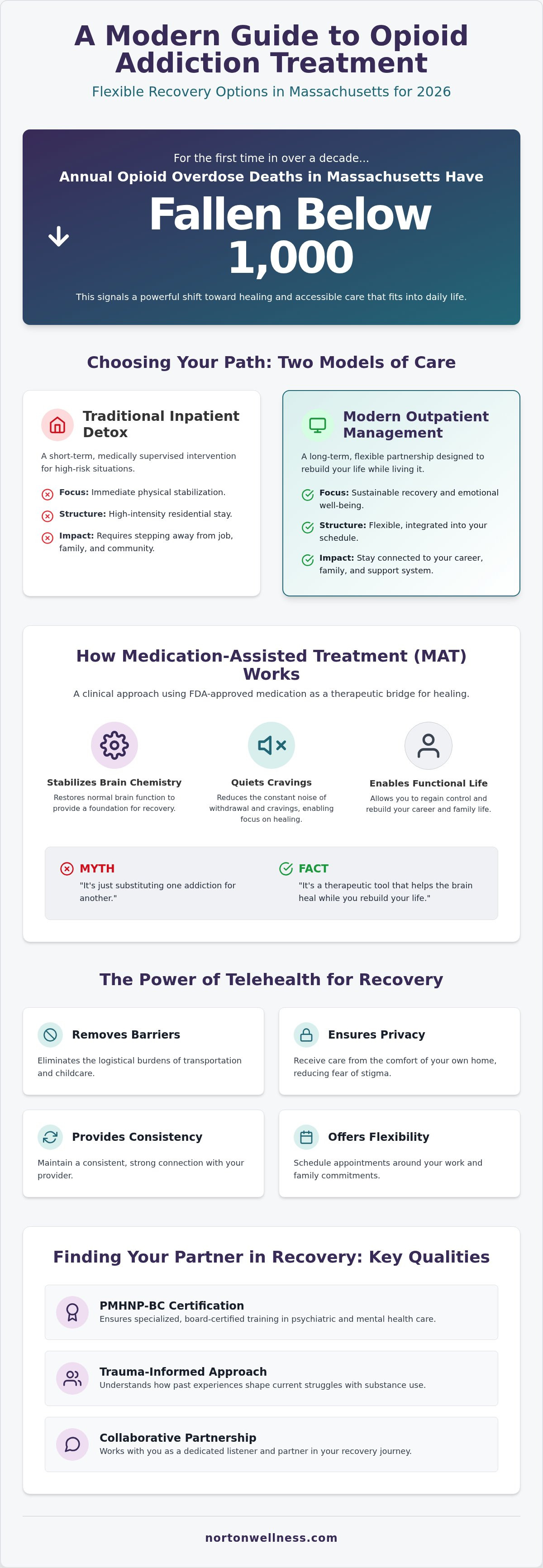
For the first time in over a decade, annual opioid overdose deaths in our state have fallen below 1,000, signaling a powerful shift toward healing. You likely want to be part of that progress, but the thought of traditional "rehab" feels impossible when you have a job to keep and a family that relies on you. It's exhausting to feel stuck between the need for help and the fear of losing your daily life to an inpatient facility. Finding the right opioid addiction treatment Massachusetts offers shouldn't mean choosing between your career and your health.
You deserve a manageable recovery plan that respects your privacy and your time. We'll show you how to find flexible, outpatient psychiatric care and telehealth options that align with your schedule. This guide covers the 2026 landscape of recovery, including updated insurance coverage and compassionate medication management that puts you back in control.
Key Takeaways
- Discover how modern recovery models prioritize your daily life by offering flexible alternatives to traditional, high-intensity inpatient programs.
- Learn how Medication-Assisted Treatment (MAT) serves as a clinical tool to stabilize brain chemistry and provide the foundation for long-term opioid addiction treatment Massachusetts residents can manage from home.
- Understand the value of partnering with a PMHNP-BC who prioritizes a trauma-informed, collaborative approach to your emotional and physical well-being.
- Navigate the 2026 landscape of insurance coverage and telehealth options to ensure your path to recovery is both accessible and sustainable.
Understanding Your Options for Opioid Addiction Treatment in Massachusetts
Choosing the right path for recovery in the Commonwealth has evolved significantly. While many people still associate healing with a 30-day stay in a secluded facility, modern opioid addiction treatment Massachusetts services offer a broader, more flexible spectrum of care. Your journey starts with Understanding Opioid Use Disorder as a manageable medical condition rather than a moral failing. In 2026, the traditional "rehab" model isn't the only path to success, as many residents find that staying connected to their community actually strengthens their long-term recovery. The Bureau of Substance Addiction Services (BSAS) oversees these local standards, ensuring that whether you choose a large hospital or a private practice, you receive quality care tailored to your specific stability and support system.
To better understand how our local communities are addressing these challenges, watch this helpful overview:
Comparing Inpatient Detox vs. Outpatient Medication Management
Inpatient detox serves as a short-term, medically supervised intervention for high-risk cases. It's a vital safety net when immediate physical stabilization is the primary goal. In contrast, outpatient medication management is a long-term partnership designed for those ready to rebuild their lives. It's a collaborative process where your emotional state is prioritized alongside your physical health. For many residents seeking opioid addiction treatment Massachusetts, this outpatient model is the most sustainable choice. It removes the massive time and financial commitments of residential stays, allowing you to stay present for your children and your career. This approach focuses on accessibility and steady, forward momentum.
Evaluating Outpatient Recovery: Suboxone and Medication-Assisted Treatment (MAT)
Evaluating outpatient recovery requires a clear understanding of how clinical tools support biological healing. When you pursue opioid addiction treatment Massachusetts, you'll likely encounter Medication-Assisted Treatment (MAT). This approach uses FDA-approved medications to stabilize brain chemistry, effectively quieting the constant noise of cravings and withdrawal. It's a common misconception that MAT is merely "substituting one addiction for another." In reality, it's a therapeutic bridge that allows your brain to heal while you regain your functional life.
A vital component of this journey is partnering with an Addiction Treatment Psychiatrist in Massachusetts who understands that substance use often masks underlying emotional pain. By integrating psychiatric care, you can address co-occurring anxiety or depression, ensuring your recovery is built on a stable emotional foundation. You can find more information about Medication-Assisted Treatment (MAT) options through the Massachusetts Medical Society.
The Benefits of Telehealth for Opioid Recovery in 2026
Telehealth has transformed the way residents in cities like New Bedford and Providence access care. Secure video appointments remove the logistical burdens of transportation and childcare, which often prevent people from seeking help. Receiving psychiatric medication management from the privacy of your own home reduces the fear of stigma and ensures a consistent connection with your provider. This flexibility is essential for maintaining sobriety while managing a busy work schedule. If you're ready to explore a plan that fits your life, you can reach out to a compassionate provider today.
Choosing the Right Provider for Your Recovery Journey
Selecting the right provider for opioid addiction treatment Massachusetts is a deeply personal decision that requires more than just clinical credentials. You need a partner who holds PMHNP-BC certification and utilizes a trauma-informed approach. This specialized training ensures they understand how past experiences often shape current struggles with substance use. A collaborative relationship is essential; your provider should be a dedicated listener who validates your emotional state rather than a passive observer. This level of partnership creates a safe space where genuine transformation is possible. You might also benefit from consulting an Anxiety and Depression Psychiatrist to ensure your mental health is treated holistically.
Practicality is the bedrock of a sustainable recovery plan. Navigating insurance and payments shouldn't be a barrier that causes unnecessary alarm or delays your progress toward stability. It's helpful to review Massachusetts opioid treatment and recovery resources to understand your coverage rights and available evidence-based options. Choosing a private practice that accepts insurance and offers streamlined online payments makes long-term care manageable. This foresight allows you to focus entirely on your healing journey rather than administrative hurdles.
Personalized Care at Norton Wellness: Serving MA and RI
At Norton Wellness, Vanessa C. Nyamunda, PMHNP-BC, acts as a "Compassionate Guide" for adults seeking stability. Our practice serves local communities in Fall River, New Bedford, and Providence through a seamless blend of in-person visits and flexible telehealth care. We prioritize active listening and a patient-centered philosophy to help you achieve emotional clarity. This isn't just about managing a prescription; it's about a collaborative journey toward a healthier life. You don't have to navigate this transition alone. Take the first step toward a collaborative recovery journey and contact Norton Wellness to schedule a consultation today.
Embrace a Path to Sustainable Healing
You now understand that recovery doesn't require pausing your life for an inpatient stay. Modern outpatient care offers the stability of medication-assisted treatment paired with the deep support of psychiatric expertise. By choosing a provider who listens, you're building a foundation for lasting change. Finding the right opioid addiction treatment Massachusetts residents can rely on is about balancing medical expertise with empathetic partnership.
Vanessa C. Nyamunda, PMHNP-BC, provides specialized expertise through telehealth for Massachusetts and Rhode Island residents. This insurance-friendly, outpatient model ensures your care remains sustainable and accessible from home. You deserve a recovery plan that respects your unique journey and your daily responsibilities.
Start your recovery journey with a compassionate psychiatric consultation
You have the strength to take this next step toward clarity and peace. We're ready to walk beside you.
Frequently Asked Questions
Is Suboxone treatment covered by insurance in Massachusetts?
Yes, Suboxone treatment is widely covered by health plans throughout the state. Massachusetts has some of the strongest insurance parity laws in the country, which means insurance providers must offer comprehensive coverage for substance use disorders. At Norton Wellness, we accept insurance and online payments to ensure your recovery is sustainable. Always check your specific plan for any copay requirements or prior authorizations.
How is outpatient medication management different from traditional rehab?
Outpatient medication management focuses on long-term stability while you live your life, whereas traditional rehab often requires a residential stay. This flexible model is a core part of opioid addiction treatment Massachusetts residents use to maintain their careers and family roles. It prioritizes psychiatric stabilization and emotional growth through scheduled appointments rather than total institutional immersion or the need for inpatient hospitalization.
Can I receive opioid addiction treatment via telehealth at Norton Wellness?
Yes, you can access addiction and substance abuse treatment through our secure telehealth platform. We provide flexible video appointments that allow you to connect with your provider from the comfort and privacy of your home. This modern approach removes barriers like transportation or childcare, ensuring you never have to miss a vital appointment due to a busy schedule or logistical challenges.
What should I expect during my first psychiatric evaluation for addiction?
During your first evaluation, you can expect a compassionate and thorough conversation about your medical history, emotional state, and recovery goals. Your provider will listen actively to understand your unique needs rather than just reviewing symptoms. We'll discuss potential medication options and therapeutic strategies to create a collaborative plan that prioritizes your stability, safety, and long-term personal growth.
Do I need to live in New Bedford or Fall River to see a Norton Wellness provider?
You don't need to live in New Bedford or Fall River to receive care. While we have physical offices in those areas, our telehealth services extend to adults across all of Massachusetts and Rhode Island. This wide reach ensures that whether you're in a busy city or a rural town, you have access to specialized psychiatric medication management and a dedicated recovery partner.


