
The most effective treatment for your brain shouldn't make the rest of your body feel like it's under siege. For many, the search for a non-stimulant ADHD medication for adults begins after experiencing a jarring afternoon crash or a spike in intense anxiety. You deserve a sense of calm reliability that doesn't disappear when the sun goes down. We understand how frustrating it is to feel like your focus is on a timer or to worry about the regulatory hurdles of controlled substances.
There is a more sustainable way to reclaim your day. These treatments provide consistent, 24-hour symptom coverage without the "wired" sensation often associated with traditional stimulants. This guide will walk you through how non-stimulants foster emotional regulation and long-term cognitive health; we will also explore how modern telehealth makes starting this collaborative journey simpler than ever.
Key Takeaways
- Understand how non-stimulant treatments provide relief for core ADHD symptoms without exacerbating existing anxiety or disrupting your sleep patterns.
- See why a 24-hour approach to medication offers a more stable, predictable baseline for managing professional responsibilities and family life after hours.
- Get a detailed look at the most effective non-stimulant ADHD medication for adults, including how newer options like Viloxazine differ from traditional treatments.
- Learn how a collaborative, patient-centered care model helps you safely transition to a long-term treatment plan through convenient telehealth appointments.
Why Adults Choose Non-Stimulant ADHD Medication
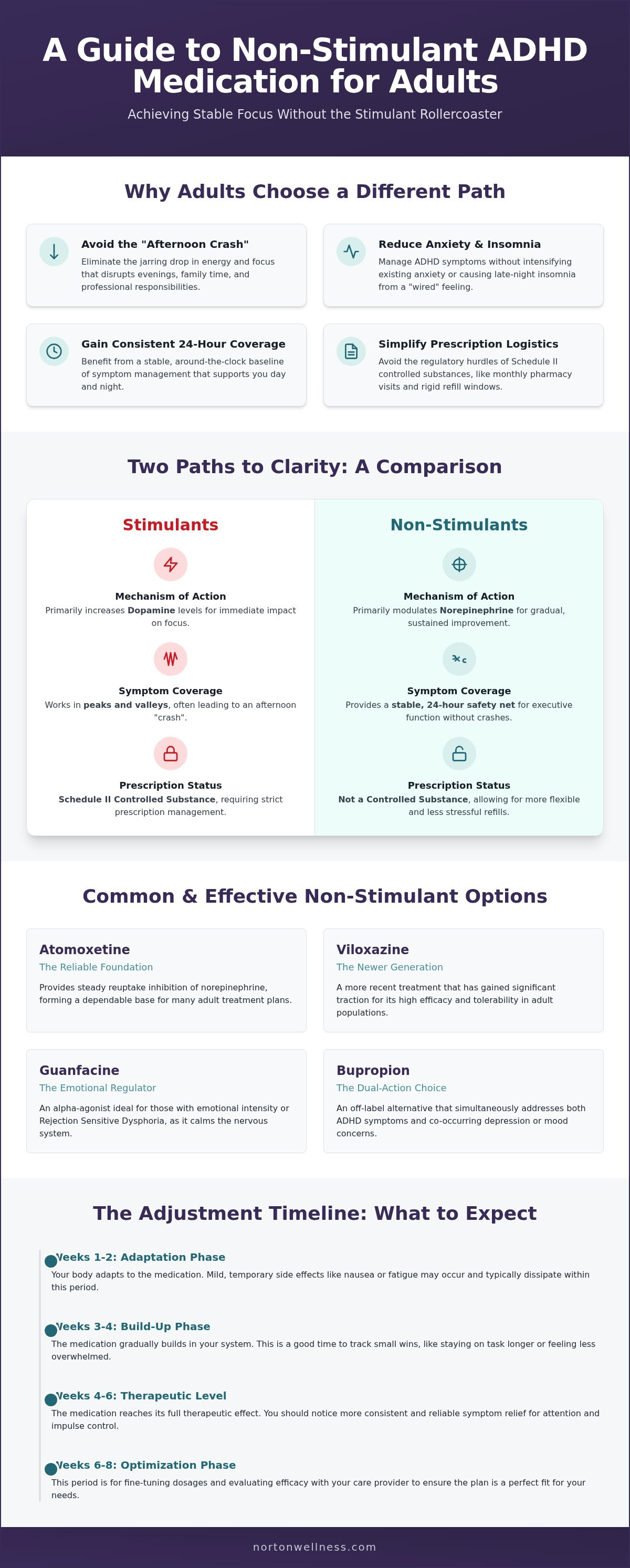
Choosing a non-stimulant ADHD medication for adults is often a strategic decision centered on emotional stability. While stimulants provide a rapid onset, many busy professionals find the subsequent "crash" makes it difficult to manage evening responsibilities or maintain a consistent mood. Non-stimulants offer a different path. They treat core symptoms without intensifying existing anxiety or causing the late-night insomnia that can make adult life feel unmanageable. You deserve a treatment plan that supports your focus during a stressful workday and your patience during a 6 PM family dinner.
Beyond symptom management, these options reduce the logistical friction often found in psychiatric care. Because they aren't Schedule II controlled substances, you won't face the same monthly pharmacy hurdles or rigid refill windows that can feel like an extra part-time job. This creates a more relaxed, sustainable relationship with your care provider. Non-stimulant medications offer a "gentle ramp" to focus, avoiding the peaks and valleys of traditional stimulant therapy.
Non-Stimulants vs. Stimulants: Understanding the Mechanism
The primary difference lies in how these medications interact with your brain's chemistry. Stimulants focus heavily on dopamine for immediate impact; however, non-stimulants primarily modulate norepinephrine to improve attention and impulse control over time. This approach allows the medication to build up in your system, creating a reliable safety net for executive function that stays active around the clock. When you consult an Adult ADHD Psychiatrist in Massachusetts, you can evaluate various ADHD treatment options to see which mechanism aligns with your body's unique needs and your long-term wellness goals.
The Most Effective Non-Stimulant Options in 2026
Modern psychiatry offers several sophisticated choices for those seeking non-stimulant ADHD medication for adults. Atomoxetine remains a reliable foundation for many, providing a steady reuptake inhibition of norepinephrine. Viloxazine represents a newer generation of treatment that has gained significant traction for its efficacy in adult populations. If you struggle with the emotional intensity of Rejection Sensitive Dysphoria, an alpha-agonist like Guanfacine can provide relief by quieting the nervous system's overreactions and improving emotional regulation. For patients managing both ADHD and depressive symptoms, Bupropion is a frequently preferred off-label alternative that addresses both clarity and mood simultaneously. While some worry these aren't as "strong" as stimulants, they often lead to higher long-term treatment adherence. They offer a stable experience without the daily cycle of peaks and withdrawals that often leads to discontinued use.
The Adjustment Timeline: What to Expect in the First 8 Weeks
Patience is your greatest ally during this transition. Unlike stimulants that work in an hour, non-stimulants require a 4 to 6 week window to reach full therapeutic levels in your bloodstream. During this first month, your brain is gradually adjusting to a new baseline of neurotransmitter activity. You might experience mild nausea or fatigue initially; these symptoms typically dissipate within the first two weeks as your body adapts. We encourage you to track small wins in productivity during this buildup phase. You might notice you're staying on task slightly longer or feeling less overwhelmed by a cluttered inbox. If you're ready to explore these options with a steady partner, you can reach out to discuss a personalized plan today.
Personalized ADHD Management in Rhode Island and Massachusetts
Finding the right non-stimulant ADHD medication for adults isn't a one-time transaction; it's a collaborative journey. Vanessa C. Nyamunda, PMHNP-BC, acts as a dedicated partner who prioritizes your emotional state while monitoring how your body responds to treatment. We don't just hand you a prescription and send you on your way. Instead, we work together to fine-tune dosages and evaluate efficacy, ensuring your path toward stability feels both safe and manageable. This patient-centered approach allows us to pivot if a specific medication isn't meeting your needs, framing your care as a shared evolution toward clarity.
Telehealth has transformed how you access specialized psychiatric medication management. Whether you're in Central Falls, RI, or a busy professional in Massachusetts, you can connect with our experts without the stress of a long commute or a crowded waiting room. Under current 2026 federal regulations, remote consultations remain a reliable, legal way to manage your treatment plan from the comfort of your home. This flexibility allows you to prioritize your mental health without disrupting your professional or family life. We believe non-stimulant options work most effectively when they are integrated with practical organizational strategies and a trauma-informed perspective that honors your unique history.
Finding Your Path to Stability in Providence and Beyond
For those who value a face-to-face connection, we provide in-person appointments in the Providence and East Providence area. We know that navigating insurance can cause anxiety, so we maintain a transparent system to ensure you feel secure before your first session. Our guide on ADHD Treatment in Providence, RI offers deeper regional insights. When you're ready, please contact Norton Wellness for a diagnostic assessment.
Reclaim Your Focus with Steady Support
Managing your symptoms shouldn't feel like a series of exhausting highs and lows. By choosing a non-stimulant ADHD medication for adults, you're opting for a treatment plan that respects your emotional stability and provides 24-hour reliability. These options eliminate the afternoon "crash" and simplify the prescription process; they allow you to focus on growth rather than pharmacy logistics. You deserve a care model that prioritizes your peace of mind as much as your productivity.
Vanessa C. Nyamunda, PMHNP-BC, specializes in this intersection of adult ADHD and anxiety, offering a compassionate guide through your transition. Our telehealth services in Rhode Island and Massachusetts ensure that expert care is always within reach. We're ready to help you build a sustainable foundation for your long-term mental health.
Your journey toward a more balanced life starts with a single, supportive conversation. We look forward to partnering with you on this path to stability.
Frequently Asked Questions
Are non-stimulant ADHD medications as effective as stimulants for adults?
Non-stimulants are highly effective tools that prioritize emotional stability and consistent focus rather than the immediate surge of a stimulant. While stimulants are often noted for their rapid impact, non-stimulant ADHD medication for adults provides a reliable baseline that lasts all day. This makes them especially valuable for those who find stimulants cause too much jitteriness or worsen underlying anxiety during a busy workday.
How long does it take for non-stimulant ADHD medication to start working?
You can expect to feel the full therapeutic benefits within four to eight weeks of starting treatment. Unlike stimulants that work within an hour, these medications need time to build up in your system to modulate norepinephrine effectively. During this initial phase, we work closely with you to monitor small improvements in your executive function and adjust your dosage as your body adapts to the new baseline.
Can I switch from a stimulant to a non-stimulant medication?
Yes, many adults successfully transition from stimulants to non-stimulant options to avoid side effects like the afternoon crash. This process is handled collaboratively; we typically use a cross-taper method where we slowly introduce the new medication while gradually reducing the old one. This ensures your symptoms remain managed and your transition feels stable as you move toward a more sustainable, 24-hour treatment plan.
Will insurance in RI or MA cover non-stimulant ADHD treatments?
Most major insurance plans in Rhode Island and Massachusetts provide coverage for non-stimulant ADHD treatments. Norton Wellness accepts insurance for both in-person visits in Providence and telehealth appointments across the region. We recommend confirming your specific pharmacy benefits, as generic options like atomoxetine are often very accessible, while newer medications may require a prior authorization from your provider to ensure coverage.


