
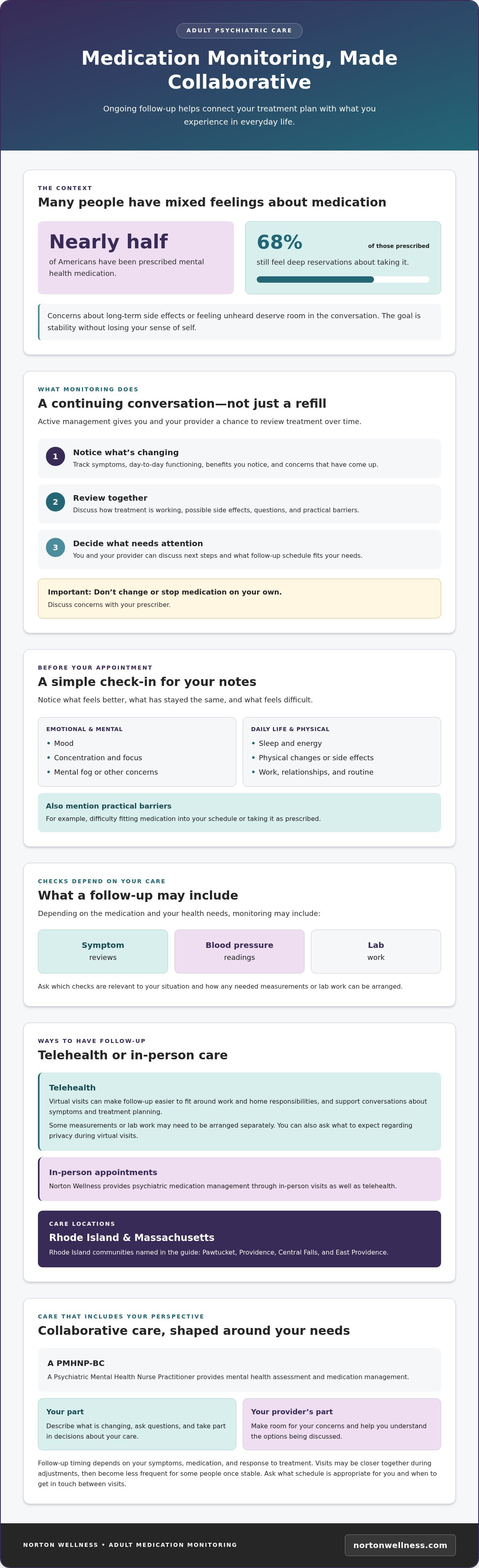
Did you know that while nearly half of Americans have been prescribed mental health medication, 68% of them still feel deep reservations about taking it? It’s understandable to worry about long-term side effects or feel that a clinic isn’t making space for your concerns. You want stability without losing your sense of self.
Adult psychiatric medication monitoring helps connect your treatment plan with what you experience day to day. This guide explains what ongoing follow-up can involve, how to prepare for appointments, and how to discuss concerns with your provider. It also covers telehealth and in-person care for adults in Rhode Island, including Pawtucket, Providence, Central Falls, and East Providence, as well as Massachusetts.
Key Takeaways
- Adult psychiatric medication monitoring helps your provider review treatment benefits and possible side effects over time.
- Before an appointment, note changes in your mood, sleep, energy, concentration, and physical well-being.
- Share concerns openly, including changes to your routine or difficulty taking medication as prescribed, so you and your provider can discuss next steps.
- Norton Wellness offers psychiatric medication management with a PMHNP-BC through telehealth and in-person appointments in Rhode Island and Massachusetts.
Adult Psychiatric Medication Monitoring: Why It Matters
Adult psychiatric medication monitoring involves regular professional follow-up to review how treatment is working and whether anything needs attention. The goal is to understand both the benefits you notice and any side effects or concerns. Your experience matters: changes in mood, sleep, focus, energy, or daily functioning can help guide a conversation about your care.
Monitoring also gives you a chance to ask questions and review what to expect from your treatment plan. Depending on the medication and your health needs, follow-up may include symptom reviews, blood pressure readings, or lab work. Your provider can explain which checks are relevant to your situation. For an overview of medication types, see this overview of psychiatric medications.
To better understand how these treatments are initiated and managed, watch this helpful video:
The Difference Between a Prescription and Active Management
A refill alone does not give you the same opportunity to review how treatment is affecting you. Active medication management includes follow-up conversations about symptom changes, side effects, and questions that have come up since your last appointment. Before a visit, consider noting what has improved, what has stayed the same, and what feels difficult. This can help you and your provider decide what to discuss. That collaborative approach is also important in trauma-informed psychiatric care, where personal history and individual concerns deserve attention.
What to Expect During Your Medication Management Appointments
An appointment is a chance to talk about how treatment is working in your actual life, not just whether you need another prescription. Your provider may ask about changes in mood, sleep, concentration, and energy since your last visit. It can help to think through what feels better, what has not improved, and whether anything has changed at work, in relationships, or in your daily routine.
Bring up side effects and practical barriers, too. Physical changes, mental fog, or difficulty fitting medication into your schedule are relevant to the discussion. Depending on the medication and your health needs, monitoring may include objective information such as blood pressure readings or lab work. Ask which checks apply to your care and whether your plan should be reviewed. Don’t change or stop medication on your own; discuss concerns with your prescriber.
Telehealth Monitoring: Secure and Convenient Care
For adults in Rhode Island and Massachusetts, telehealth can make follow-up easier to fit around work and home responsibilities. A virtual appointment can support a conversation about symptoms and treatment planning. Some measurements or lab work may need to be arranged separately, so ask your provider how those checks can be completed. You can also ask what to expect regarding privacy during virtual visits.
Learn more about telehealth psychiatric care and how it can support ongoing follow-ups. If you’re considering medication management, explore psychiatric medication management options with Norton Wellness.
Navigating Collaborative Care in Rhode Island and Massachusetts
A Psychiatric Mental Health Nurse Practitioner (PMHNP-BC) provides mental health assessment and medication management. In collaborative adult psychiatric medication monitoring, your perspective is part of the conversation: you can describe what’s changing, ask questions, and take part in decisions about your care. Look for a provider who gives you room to explain your concerns and understand the options being discussed.
Choosing a provider who can see patients in your state is an important practical step. Norton Wellness provides psychiatric medication management through telehealth and in-person visits in Rhode Island and Massachusetts. Adults in Pawtucket, Providence, Central Falls, and East Providence can contact the practice to confirm appointment availability for their location and ask which insurance plans are currently accepted.
Monitoring does not necessarily mean frequent appointments indefinitely. Follow-up timing depends on your symptoms, medication, and response to treatment. Visits may be closer together while treatment is being adjusted, then become less frequent for some people once they’re stable. Ask your provider what schedule is appropriate for your needs and when to get in touch between visits.
Finding the Right Provider for Your Journey
Look for clinical expertise and a communication style that helps you feel heard. Ask how the provider reviews benefits and side effects, explains options, and includes your feedback in decisions. You can also explore Norton Wellness’s information about addiction treatment and ADHD care. To discuss whether medication management may fit your needs, contact Norton Wellness.
Move Forward With Care That Listens
Medication care should leave room for your questions, your experience, and changes in your needs. With adult psychiatric medication monitoring, you and your provider can review how treatment is affecting your well-being and discuss informed next steps. Regular follow-up creates opportunities to raise concerns and revisit your plan as your care evolves.
At Norton Wellness, Vanessa C. Nyamunda, PMHNP-BC, leads patient-centered psychiatric medication management. Telehealth and in-person appointments are available in Rhode Island and Massachusetts, and the practice accepts insurance. Coverage can vary, so check which plans are currently accepted for your location.
Your next step can be a conversation, not a commitment to have everything figured out. Care should treat you as a partner and make space for questions about your treatment.
Frequently Asked Questions
How often is psychiatric medication monitoring required for adults?
There isn’t one schedule for every adult. Appointment timing depends on the medication, your symptoms, and how treatment is going. For depression, follow-up may begin every one to two weeks, then shift to monthly and, once stable, every two to three months. Your prescriber can set a schedule with you and adjust it if your needs change.
Can I do my medication monitoring appointments via telehealth in RI or MA?
Yes. Norton Wellness offers telehealth and in-person appointments in Rhode Island and Massachusetts, including for adults in Pawtucket, Providence, Central Falls, and East Providence. Your provider can discuss whether a virtual appointment fits your follow-up needs. If your care calls for measurements or lab work, ask how those checks can be arranged locally.
What happens if I experience side effects between my scheduled monitoring visits?
Contact your prescribing provider using the practice’s usual communication instructions and describe what changed, when it began, and how it affects you. Don’t stop or change your medication dose without medical guidance. If symptoms feel severe or rapidly worsen, seek urgent medical care rather than waiting for your next scheduled appointment.
Will my insurance cover recurring medication management fees?
It may, but coverage for follow-up medication management depends on your specific plan, benefits, and location. Norton Wellness accepts insurance, but accepted carriers and coverage can vary between Rhode Island and Massachusetts. Before an appointment, contact your insurer and the practice to confirm your benefits, any referral or authorization requirements, and what costs you may be responsible for.


