
What if an ADHD medication follow-up could turn everyday observations into clearer, shared treatment decisions? If you’re looking into Darlington Pawtucket adult ADHD follow up appointments, you may be wondering what the clinician will ask, how to describe benefits or side effects, and how to fit ongoing care into a busy routine.
Follow-up visits give you a chance to discuss changes in symptoms, your medication experience, and how ADHD affects daily life. You don’t need perfect answers to make the conversation useful. This article explains what a typical follow-up may cover, what notes to bring, and how to talk openly about what’s working or needs attention. Norton Wellness provides adult ADHD treatment and psychiatric medication management through in-person appointments in Rhode Island and telehealth, with a collaborative approach centered on your experience and next steps.
Key Takeaways
- Darlington Pawtucket adult ADHD follow up appointments are an opportunity to review your treatment experience and discuss next steps with a clinician.
- Bring a few notes about your goals, recent changes, medication experience, and questions to help guide the conversation.
- Specific examples from work, home, routines, or relationships can help explain how ADHD affects your daily functioning.
- Norton Wellness provides adult ADHD treatment and medication management, with in-person appointments in Rhode Island and telehealth options.
Adult ADHD follow-up appointments near Darlington, Pawtucket: what are they for?
A useful follow-up makes space to review how treatment is going and consider what may help next. For adults seeking Darlington Pawtucket adult ADHD follow up appointments, the visit is a collaborative check-in, not a test or a report card on your progress.
Your clinician may ask about attention, organization, daily functioning, medication response, and concerns. You could talk about whether it’s easier to start tasks, keep track of responsibilities, or stay focused at work. Share any unwanted effects or changes in your circumstances, too. You don’t need to have everything figured out before the conversation. The goal is to understand your experience and discuss next steps together. For background on symptoms and diagnostic context, see this overview of adult attention deficit hyperactivity disorder.
Care plans and follow-up timing are individualized. The right approach depends on your needs, treatment experience, and the concerns you bring to the visit, so don’t assume there is one fixed schedule or outcome.
How follow-ups differ from an initial adult ADHD evaluation
An initial evaluation helps establish a clinical picture by exploring symptoms, history, and how challenges affect daily life. A follow-up focuses on ongoing care: what has changed, what feels helpful, and what still needs attention. You can revisit your goals as work, relationships, routines, or other circumstances shift. For broader context on treatment, read about adult ADHD care in Massachusetts.
How to prepare for an adult ADHD medication follow-up in Pawtucket
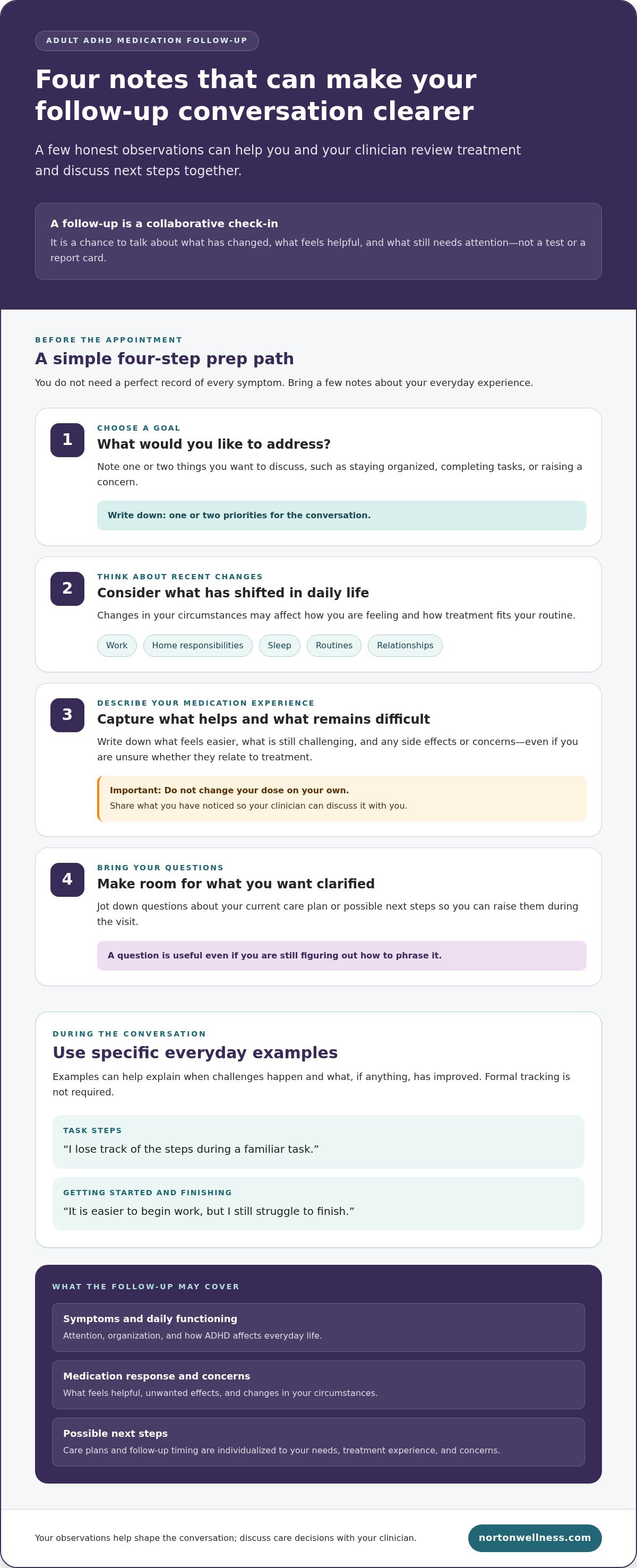
You don’t need a perfect record of every symptom to make a follow-up useful. A few honest notes can help you describe how treatment feels in everyday life and give your clinician a clearer basis for discussing next steps.
- Choose a goal. Note one or two things you’d like to address, such as staying organized, completing tasks, or discussing a concern.
- Think about recent changes. Consider shifts in work, home responsibilities, sleep, routines, or relationships that may affect how you’re feeling.
- Describe your medication experience. Write down what feels easier, what remains difficult, and any side effects or concerns. Don’t change your dose on your own. Share what you’ve noticed so your clinician can discuss it with you.
- Bring your questions. Jot down anything you want clarified about your current care plan or possible next steps.
Specific examples are often more useful than searching for the perfect words. You might describe losing track of steps during a familiar task, or finding it easier to begin work but still struggling to finish. Formal tracking isn’t required. For more patient-focused guidance, CHADD explains how to prepare for an adult ADHD medication follow-up and why ongoing check-ins matter.
What to bring up during the appointment
Explain when challenges happen and what, if anything, has improved. Mention relevant health changes, side effects, or concerns, even if you’re unsure whether they relate to treatment. Your observations help shape the conversation; they don’t determine a dose change. For nearby regional context, explore ADHD treatment options in Providence. If you’re considering Darlington Pawtucket adult ADHD follow up appointments, learn more about adult ADHD care with Norton Wellness.
Starting adult ADHD follow-up care from Darlington or elsewhere in Pawtucket
Ongoing care should make room for your experience, questions, and changing needs. Norton Wellness provides adult ADHD treatment and psychiatric medication management, with follow-up conversations focused on reviewing your care and discussing appropriate next steps together. Adults in Darlington, Pawtucket, Providence, Central Falls, and East Providence can choose Rhode Island in-person appointments or telehealth.
A follow-up isn’t about having everything figured out before you arrive. It’s a chance to share what you’ve noticed, raise concerns, and work with a clinician on a plan that reflects your circumstances. Explore adult ADHD care with Norton Wellness.
Choosing a follow-up format that fits your routine
Norton Wellness offers in-person and telehealth appointments in Rhode Island. As you choose a format, consider what works for your privacy, access, and daily schedule. A virtual visit may fit more easily when travel is difficult, while an in-person appointment may better suit your preferences. Choose the format that works for your circumstances and supports an open conversation. For more on virtual psychiatric care, read about telehealth mental health care in Rhode Island.
Make your next ADHD care conversation count
A follow-up appointment is a chance to review how treatment fits your daily life, share benefits or concerns, and discuss next steps with your clinician. A few notes about recent changes, medication experience, and questions can help you feel prepared. For Darlington Pawtucket adult ADHD follow up appointments, ongoing care can be collaborative and responsive to your needs.
Norton Wellness provides adult ADHD treatment and psychiatric medication management, with in-person appointments in Rhode Island and Massachusetts and telehealth options. Insurance and online payments are accepted.
Care should make space for your questions and experience. Take the next step by scheduling an appointment with Norton Wellness.
Frequently Asked Questions
How often do adults need ADHD follow-up appointments?
There’s no single follow-up schedule that fits every adult. Timing depends on your treatment plan, current needs, and your clinician’s judgment. Each appointment is an opportunity to discuss how care is going and whether next steps may be appropriate. Don’t change your medication or visit frequency on your own; discuss those decisions with your clinician.
What happens at an adult ADHD medication follow-up?
Your clinician may ask about attention, organization, daily functioning, treatment experience, and any changes or concerns since your last visit. You can share what has felt easier or more difficult and ask questions about your care. The discussion helps guide individualized next steps. A follow-up doesn’t guarantee that your medication or dose will change.
Can I attend an adult ADHD follow-up by telehealth in Pawtucket, Rhode Island?
Yes. Norton Wellness offers telehealth appointments in Rhode Island, as well as in-person appointments. For Darlington Pawtucket adult ADHD follow up appointments, telehealth may make it easier to fit ongoing care into your routine. Your appointment format and clinical needs may vary. Use the practice’s scheduling page to take the next step.
How should I prepare for an ADHD follow-up appointment?
Before your visit, jot down what has improved, what remains challenging, and any questions you want to ask. Include a specific example from work, home, or an everyday routine, along with medication concerns if relevant. You don’t need a perfect symptom log. A few clear notes can help you explain your experience and make the conversation more useful.


